

Could an offshore structure be the wrong fit, even if you’re looking for a straightforward way to establish an international business presence? Ajman offshore company formation may suit some purposes, but its permitted activities and practical limitations need to match what you intend to do.
Before committing, clarify what the company can do, how it compares with a free zone or mainland structure, and what will be expected after registration. This guide covers the decisions to make, the documents to check, ongoing obligations and banking considerations. Requirements can change, so confirm current details with the relevant authority and a qualified adviser.
EBMS Business Services LLC advises on UAE offshore, free zone and mainland company formation, including jurisdiction and structure fit. Use the steps below to compare options against your business needs, identify questions to resolve before applying, and decide whether an Ajman offshore structure is worth exploring.
Key Takeaways
- Assess ajman offshore company formation against your intended activities, customers, counterparties, and operating model before selecting a structure.
- Compare offshore, free zone, and mainland options by practical fit, then confirm each structure’s scope and requirements with the relevant authority.
- Use document categories to prepare, but request the current checklist and verify accepted formats, attestation, and update requirements before applying.
- Plan for records, renewals, compliance, and banking after incorporation, and distinguish adviser support from decisions made by authorities and financial institutions.
What Ajman offshore company formation means, and what to verify first
Ajman offshore company formation means registering a company under an offshore category associated with Ajman, subject to that jurisdiction’s current rules and permitted scope. The term alone doesn’t establish which activities a particular company may undertake. Before relying on a description, confirm the company category, responsible authority and applicable permissions through current official information.
The Ajman Free Zone overview provides background, but it doesn’t confirm the rules for a specific offshore structure. Treat service-provider descriptions as a starting point for questions, not final confirmation of eligibility or operating rights. Check that any guidance refers to the current category you’re considering.
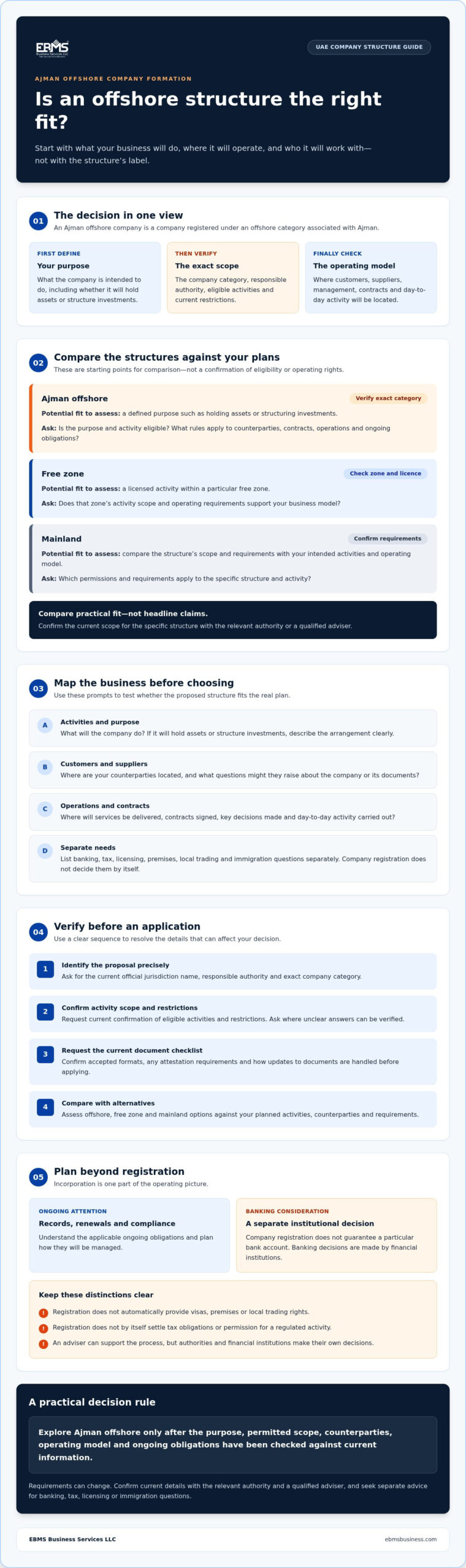
Start by defining the commercial purpose. A company intended to hold assets or investments may raise different suitability questions from one intended for another business purpose. Map where customers, suppliers, management and day-to-day activity will be located. For example, identify where contracts will be signed, where services will be delivered and where key decisions will be made. This helps test the structure against the actual business, rather than choosing based on a label.
What should an Ajman offshore structure be assessed against?
Write down what the company is meant to do and who it will deal with. Identify customer and supplier countries, where key decisions will be made, and where the business activity will take place. If the plan involves holding assets or structuring investments, describe those arrangements clearly and ask whether the specific structure is suitable for that purpose.
Keep separate questions separate. Company registration doesn’t, by itself, determine whether the business can obtain a particular bank account, meet tax obligations, conduct a regulated activity, trade with local customers, secure premises or support an immigration application. Confirm each issue with the relevant authority or institution. Registration doesn’t automatically provide visas, premises or local trading rights.
Which facts should you confirm before comparing providers?
Ask each provider to identify the current official jurisdiction name, the responsible authority and the precise company category being proposed. Request current confirmation of eligible activities and restrictions. If an answer is unclear, ask where it can be verified before proceeding.
Then test the proposed structure against the company’s purpose and counterparties. A useful comparison explains what needs to be confirmed for your operating model, rather than relying on broad claims about offshore companies. Compare alternatives against your planned activities and requirements, and check whether each option’s scope is documented. Confirm Ajman-specific permissions, documentation and obligations with the relevant authority before deciding. Seek qualified advice on separate banking, tax, licensing or immigration questions.
Ajman offshore vs free zone vs mainland: compare the structure to your plans
Compare structures by how the business will operate, not by a label or a provider’s headline claim. Offshore, free zone and mainland structures may have different activity scopes and operating conditions. For Ajman offshore company formation, confirm the specific category and its current permissions with the relevant authority. A legal overview of UAE offshore zones can provide context, but it doesn’t replace confirmation of the rules for the structure you’re considering.
Before comparing options, list the intended activities, customer and supplier locations, where management will work, expected contracts, banking needs and documents counterparties may request. Then ask the authority or a qualified adviser which structure supports that operating model.
| Structure | Potential fit | Questions to confirm | Decision caveat |
|---|---|---|---|
| Ajman offshore | A business assessing an offshore structure for a defined purpose, such as holding assets or structuring investments. | Is the proposed purpose and activity eligible? What rules apply to counterparties, contracts, operations and ongoing obligations? | Don’t infer permitted activities or local operating rights from the term “offshore.” Confirm the current scope for the specific category. |
| Free zone | A business assessing a licensed activity within a particular free zone and considering its operating requirements. | Does the relevant authority license the intended activity? What premises, staffing, visa or other requirements should be checked? | Conditions differ by authority and activity. Review the specific free zone’s current terms rather than general claims. |
| Mainland | A business assessing a mainland structure for its planned activities and operating footprint. | Which activity approvals, licensing conditions and operational requirements apply to the proposed business? | Requirements depend on the activity and current rules. Assess the structure against your plans rather than treating it as a location recommendation. |
When should you assess an offshore structure?
Consider it when you can clearly describe the company’s purpose and where its commercial activity will take place. Map counterparties and expected contracts, then identify banking and documentation needs. Ask for confirmation that the proposed activity and operating arrangements fit the specific structure. Incorporation doesn’t confirm separate banking, tax, licensing or immigration outcomes.
When should you compare free zone or mainland options?
Compare alternatives if the plan depends on a licensed operating activity or a different operational footprint. Assess a free zone against its authority’s current terms and mainland formation against the requirements for the intended activity. Treat each option as a separate assessment, and don’t assume one automatically converts into another. EBMS advises on UAE mainland, free zone and offshore formation, including jurisdiction and structure fit, which can help founders frame questions before choosing.
How to decide whether Ajman offshore formation fits your business
A structured review can reveal unanswered questions before you commit. For ajman offshore company formation, assess the business purpose and operating model first, then verify current scope and obligations with the relevant authority. This framework supports a reasoned comparison, but it can’t predict approval or replace professional advice.
Define the purpose, map the activity, identify counterparties, verify the scope and compare obligations before committing to a structure.
| Step | How it informs suitability | Evidence or questions to prepare |
|---|---|---|
| 1. Define the purpose | Clarifies what the company is intended to achieve and gives the review a practical starting point. | Is the aim to hold assets, structure investments or pursue another purpose? Prepare a concise business rationale. |
| 2. Map the activity | Shows what the company will actually do, rather than relying on a broad business description. | Describe proposed products or services, the revenue model, contracts and where each activity will occur. |
| 3. Identify counterparties | Highlights practical needs that may affect structure suitability, including customer expectations and banking needs. | List customer and supplier countries, ownership, management, contracting parties and expected banking requirements. |
| 4. Verify the scope | Tests whether the proposed activity and operating arrangements fit the current category’s confirmed permissions. | Ask the relevant authority or a qualified adviser to confirm eligible activities, restrictions and applicable conditions. |
| 5. Compare obligations | Shows whether ongoing requirements align with the company’s operating plans and resources. | Ask about current documentation, records, renewals and compliance duties, including any activity-specific obligations. |
Which business details should founders prepare?
Prepare a clear description of the proposed products or services, revenue model, customers and countries involved. Include ownership and management details, who will enter contracts, and the banking arrangements the business expects to need. Note any plans involving staff, visas, premises or regulated activities as questions to verify, not assumptions about what the structure permits.
How can you identify a mismatch before applying?
Compare the planned activity with the scope confirmed by the authority. Check whether expected banking arrangements, counterparties and compliance processes are workable for the proposed structure. If a core operational need remains unsupported or uncertain, pause and reassess alternatives before proceeding. The UAE’s economic diversification program offers broader economic context, but it doesn’t determine which company structure suits an individual business.
Ajman offshore application preparation: documents, checks, and questions
Request a current checklist for the specific Ajman offshore category you’re considering. Requirements may depend on ownership, business purpose and proposed activity, so treat general document lists as preparation aids rather than confirmed filing rules. Ask the relevant authority or its authorised channel to clarify the submission process and which details apply to your case.
Information that may help you prepare includes:
- Identity and ownership: details of proposed owners and, where relevant, the entities behind corporate ownership.
- Business purpose and activity: a clear description of the intended activity, commercial purpose and expected counterparties.
- Supporting business information: materials that explain the company’s plans or ownership, if requested.
- Document handling: accepted formats, attestation or certification, translation, validity dates and how to update documents if details change.
This is not a definitive Ajman document list. Authority filing requirements, an adviser’s information requests and a bank’s due diligence are separate matters. Confirm which documents are officially required and which are requested to assess your plans or prepare an application. Check that names and ownership details are consistent across documents, and ask whether the checklist is current before submitting.
What questions should you ask the relevant authority or adviser?
Ask for confirmation of current activity eligibility, the documents applicable to your ownership and purpose, the submission route, and any renewal or ongoing obligations. Clarify which requirements vary by activity or structure. If an operational or compliance point could affect your decision, request written confirmation and keep it with your company records.
Also ask about document format, attestation, translation, validity and the process for reporting changes. These details affect preparation, so avoid relying on a checklist that may relate to a different company category or an earlier application.
How should you assess banking and ongoing compliance?
Company formation and corporate banking are separate processes. A bank reviews an application independently and may request additional information. Neither incorporation nor application assistance guarantees an account. EBMS provides UAE corporate bank account assistance, while the financial institution makes its own decision.
For ongoing planning, confirm which records, disclosures, compliance tasks and renewal steps apply to the specific structure, and decide who will track them. Keep those obligations distinct from bank requests, which depend on the institution and its review of the company.
After Ajman offshore formation: plan for operations and choose informed support
Registration is a milestone, not the end of planning. After ajman offshore company formation, create a calendar for confirmed renewal dates and recurring obligations, and keep company records organised. Ask the relevant authority or a qualified adviser which records, disclosures and compliance steps apply to your structure. Check for updates instead of relying indefinitely on an old checklist.
Banking is a separate assessment. An adviser may help with preparation, but the financial institution decides whether to open an account and what due diligence to request. Likewise, verify whether accounting, VAT or other obligations apply to the company’s activities and circumstances before arranging ongoing support. Requirements may differ between entities.
What should founders plan for after incorporation?
Confirm the renewal schedule and ongoing obligations using current authoritative guidance, then assign responsibility for tracking deadlines and maintaining records. Review whether the company’s actual activities have changed from the purpose and scope originally assessed. If they have, ask whether that affects the company’s position or requires an update. Keep banking, tax and other operational questions distinct from the fact of registration.
How can EBMS support a structure assessment?
EBMS Business Services LLC advises on UAE offshore formation, jurisdiction and legal-structure fit. Its support also includes government documentation and PRO services, as well as assistance with banking, renewals and compliance. Transparent communication and multilingual assistance can help clarify the steps to discuss, but they don’t replace decisions made by authorities, banks or other parties, and they don’t guarantee approvals or account opening.
If you’re weighing a structure or planning post-formation support, discuss your business setup requirements with EBMS for an individual assessment.
Before proceeding, use this short action list:
- Confirm the company’s commercial purpose.
- Verify the current scope and requirements with the relevant authority.
- Compare offshore, free zone and mainland structures against your operating needs.
- Prepare questions about documents, records, renewals, compliance and banking.
- Seek tailored advice where a requirement or operational point remains unclear.
Make your next structure decision with clarity
Choosing ajman offshore company formation should begin with your business purpose and operating plans, not an assumption about what offshore registration permits. Confirm the current Ajman-specific scope and requirements with the relevant authority, then compare offshore, free zone and mainland structures against your activities, counterparties and ongoing needs.
Before proceeding, prepare questions about the documents that apply to your ownership and activity, the obligations that continue after incorporation, and banking or other operational needs that require separate review. Clear answers can support a more informed choice, though approvals and decisions remain with the relevant authorities and institutions.
EBMS Business Services LLC states it was established in 2015 and provides support for offshore formation, jurisdiction guidance and post-setup services. To assess your options and next steps, discuss your UAE company structure with EBMS. Confirming your purpose and the current requirements gives you a sounder basis for deciding.
Frequently Asked Questions
What is an Ajman offshore company?
An Ajman offshore company is a company registered under an offshore category associated with Ajman, subject to the current rules and scope of that jurisdiction. The label alone doesn’t establish which activities the company may undertake or where it can operate. Before relying on a particular use, confirm the applicable company category, activity eligibility and conditions with the relevant authority or a qualified adviser.
Can an Ajman offshore company do business in the UAE?
That depends on the activity, location and permissions confirmed for the specific company category. Don’t assume registration automatically permits trading with UAE customers or carrying out activities in the UAE. Describe your planned transactions and where work will take place, then ask the relevant authority whether they fall within the company’s confirmed scope or require a different structure, licence or approval.
Is Ajman offshore company formation suitable for every business?
No. Ajman offshore company formation should be assessed against the company’s purpose, activities, customers, counterparties and operating model. A business that needs a particular licensed activity, premises, staff or local operating arrangements should verify whether an offshore structure supports those needs. If a core requirement remains unclear, compare free zone and mainland alternatives before deciding. Suitability depends on current rules and the company’s circumstances.
How much does Ajman offshore company formation cost?
There isn’t one cost that applies to every application, and this guide doesn’t quote a setup price. The amount may depend on the proposed structure, required support and current authority or service charges. Request a current written quotation and check what it includes, such as registration-related services and recurring renewal or compliance costs. Confirm applicable charges directly before committing, since fees can change.
What documents are needed to form an Ajman offshore company?
The current checklist depends on the company category, ownership and proposed activity, so request it from the relevant authority or authorised channel. As preparation, gather identity and ownership details, a clear activity description, and information explaining the company’s purpose and counterparties. Ask about accepted formats, attestation, translation, document validity and update rules. Adviser requests and bank due diligence may involve information separate from authority filings.
Does an Ajman offshore company automatically get a UAE bank account?
No. Company registration and corporate bank account opening are separate processes. A bank independently assesses the company, its ownership, activities, counterparties and supporting information, and may request additional documents. Incorporation or assistance with an application doesn’t guarantee account approval. Before choosing a structure, discuss expected banking needs and confirm with relevant financial institutions whether they can consider the proposed company.
How do I choose between Ajman offshore, a free zone, and mainland formation?
Start with the company’s intended activities, customer locations and operating footprint. Then compare each structure’s current activity scope, licensing conditions, premises or staffing needs, ongoing obligations and suitability for counterparties and banking. Confirm Ajman-specific permissions with the relevant authority, and assess free zone and mainland options separately. Don’t assume one structure automatically converts into another or meets every operational need.