

Can you establish a UAE company without moving to the country first? In many cases, company ownership and residency are separate decisions, so a UAE residency visa isn’t necessarily a prerequisite to forming a business. Understanding how to start a business in UAE without residency means looking beyond the licence: the right setup depends on your activity, customers, operating model, and plans for banking and ongoing administration.
Choosing between a mainland, free zone, or offshore structure can feel complex, particularly when you’re coordinating applications from abroad. This guide explains how to compare those options, prepare for the formation process, and plan for banking, immigration, and compliance after setup. Requirements can vary by authority and activity, so use the guidance as a planning framework and check current instructions for your chosen route.
Key Takeaways
- Learn how to start a business in UAE without residency by treating company formation and residency as separate decisions, then checking the requirements for your activity and chosen authority.
- Compare mainland, free zone, and offshore structures against where you plan to trade, who your customers are, and how you’ll operate.
- Plan for banking and ongoing obligations after formation. A licence does not guarantee bank account approval or resolve immigration requirements.
- Use a clear setup sequence: define your activity, compare structures, prepare documents, and plan post-formation tasks.
- EBMS supports free zone, mainland, and offshore company formation, including licensing, documentation, and PRO services.
Can you start a business in the UAE without residency?
In many cases, yes. A founder can establish or own a UAE company without first holding UAE residency. However, residency, company formation, and permission to carry out a particular business activity are separate matters. The applicable process depends on the structure and relevant authority. So, how to start a business in UAE without residency begins with identifying what the company needs to do, rather than assuming every setup follows the same process.
A non-resident founder owns or plans to own a UAE business while living outside the country and without UAE residency status. Company formation means registering a legal entity and securing the relevant licence. UAE residency is an immigration status that may be pursued separately. These matters are connected to how you plan to run the business, but they are not interchangeable.
Company ownership and residency are separate planning questions
Start with the business activity and intended structure. Mainland, free zone, and offshore companies have different purposes and operating conditions, and requirements can differ by authority. A founder serving international clients remotely may have different needs from one planning to trade directly in the UAE. For an overview of free zones, see UAE Free-trade Zones. Use the selected authority’s current rules to guide your decision.
Residency is an immigration decision, not another name for company registration. A licence doesn’t automatically grant the owner a visa. If you later plan to live or work in the UAE, consider the relevant immigration process separately. Free zone company setup is one route to assess, but permitted activities and requirements depend on the chosen jurisdiction.
What a non-resident founder should expect at the outset
Plan for identity and company documents, any activity-specific approvals, and the authority’s application procedures. Required documents and steps vary, and some stages may involve physical presence or additional verification. Don’t assume every part can be completed online or from abroad. Review the current process for your intended structure before committing, and allow time to respond if an application needs clarification or further documentation.
Formation is only one part of operating a business. Banks make their own assessments, and a licence doesn’t guarantee approval for a corporate account. Visa eligibility and approval also depend on the applicable immigration process and individual circumstances. EBMS supports company formation, licensing, and documentation, including free zone company setup. Decisions remain with the relevant authorities and institutions.
Before proceeding, note where you’ll live, who your customers will be, what activity the company will conduct, and whether you expect to need UAE residency. Then use those details to review the current requirements for the chosen structure. This helps you plan the business setup and any immigration application as distinct processes.
Compare UAE company structures before choosing a non-resident setup
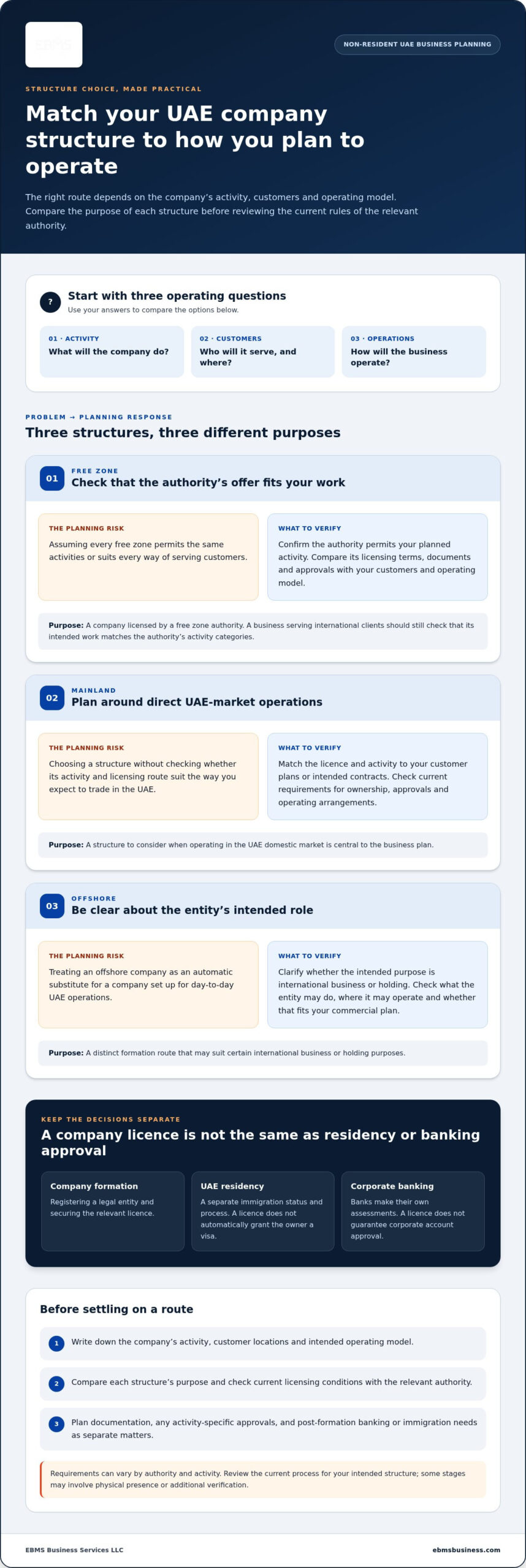
The right structure depends on what the company will do, where its customers are, and how it will operate. A business serving international clients may have different requirements from one planning to trade directly in the UAE market. List your intended activities first, then compare structures against your actual operating needs. No option is right for every non-resident founder.
Use the overview below as a starting point, then review the selected authority’s current licensing terms. A UAE Free Zone company setup may suit some business plans, but free zones differ in permitted activities and procedures.
Free zone
Purpose: A company licensed by a free zone authority.
Operating needs: Check whether the authority permits your planned activities and whether its terms suit your customers and operating model.
Compare: Available activities, required documents and approvals, and whether your intended way of serving UAE customers is permitted.
Mainland
Purpose: A structure to consider when the business intends to operate in the UAE domestic market.
Operating needs: Match the licence and activity to how you expect to serve customers or pursue contracts in the country.
Compare: Current requirements for your activity, ownership structure, approvals, and operating arrangements.
Offshore
Purpose: A distinct formation route that may suit certain international business or holding purposes.
Operating needs: Consider its intended role carefully. It isn’t automatically a substitute for a company set up to conduct day-to-day operations in the UAE.
Compare: What the entity is permitted to do, where it can operate, and whether it supports your commercial plan.
When a free zone structure may fit the business plan
A free zone is worth assessing if its permitted activities align with your products or services and its terms fit your operating model. For example, an overseas consultancy serving international clients should compare its planned work with the activity categories offered by the relevant authority. Free zones aren’t identical, so review the selected authority’s licensing conditions and application requirements before deciding.
How mainland and offshore options differ in purpose
Mainland formation is relevant to assess when direct UAE-market operations are central to the plan. Check whether the activity and licensing route fit how you expect to trade. Offshore formation serves a different purpose and may not suit a company that needs to conduct local operating activity. Compare the intended use of each structure, not just its name or formation route.
To make the comparison practical, write down your planned activities, target customers, likely operating arrangements, and any expected contracts. Use those details to assess each structure and identify the requirements that apply. If you’d like tailored help comparing formation options, you can discuss your business setup needs with EBMS.
Plan for banking, residency, and management after formation
A company licence is a starting point, not a complete operating plan. After formation, consider banking, immigration, day-to-day management, and the obligations that apply to your company. Planning these elements early can reveal practical gaps, such as who will manage transactions or respond to official requests while you’re abroad.
For founders considering how to start a business in UAE without residency, treat each post-formation requirement as a separate decision. The company’s structure and activity matter, but they don’t determine every bank’s decision or settle an owner’s immigration status. Requirements vary, so review current instructions from the relevant authorities and institutions.
Banking and operational readiness for an overseas founder
A corporate bank account requires a separate application. Banks assess applications under their own processes, and incorporation or a trade licence doesn’t guarantee approval. Before applying, organise clear information about the company’s activity, ownership, expected transactions, and business model. Be ready to provide supporting documents or explanations if requested during the review.
EBMS provides corporate bank account opening assistance to help founders prepare for this stage, while the bank makes the approval decision. Also plan how the business will function day to day: decide who will handle payments, bookkeeping, official correspondence, and company records if you remain abroad.
Decide whether UAE residency is useful for your plans
Consider whether you expect to live in the UAE, carry out work there, or manage regular business activities in person. If you plan to remain overseas, decide how you’ll oversee decisions and administrative tasks remotely. Company ownership and an application for immigration status are distinct matters, with separate procedures and documents.
If you may seek residency, assess that process separately and review the current requirements for your circumstances. A company licence alone doesn’t guarantee a visa, and you shouldn’t assume a particular outcome. Identity documents and other application steps may be required. Confirm the applicable process with the relevant authority.
Tax and compliance planning also deserve attention. Living outside the UAE doesn’t automatically remove a company’s obligations, and the same treatment may not apply to every business. Duties depend on the company’s circumstances and current rules. Keep accurate records from the outset and seek advice that reflects your structure, activity, and situation.
As a next step, map who will manage banking, records, official communications, and any residency application. Identify which requirements need attention before launch. EBMS supports formation-related administration and post-setup planning. Contact EBMS about your business setup for support tailored to your plans.
Follow a practical sequence to set up from abroad
A clear sequence helps you avoid choosing a licence before you know what the company needs to do. If you’re researching how to start a business in UAE without residency, plan both the application and the practical work that follows formation. Requirements differ by activity and authority, so use this as a planning framework and check current instructions before submitting documents or making commitments.
Steps to prepare before submitting a formation application
Begin with your business plan, then use it to compare structures and prepare the application. The chosen jurisdiction and activity can affect licensing, approvals, documents, and whether a stage requires your presence. Follow the authority’s current directions rather than assuming one document set or remote process applies to every founder.
- Define the activity. Describe the products or services the company will provide. Check that the activity aligns with the licence category you’re considering.
- Map customers and operations. Note whether customers will be in the UAE, abroad, or both. Explain how you’ll deliver the work, manage contracts, and handle routine decisions.
- Compare structures and jurisdictions. Match your activity and operating model to the relevant mainland, free zone, or offshore route. Identify the licensing authority and review its current conditions.
- Confirm requirements before applying. Check the current document list, approval steps, submission method, and any physical-presence requirements. Requirements may differ by activity and individual circumstances.
- Prepare founder and business records. Organise identity, ownership, and business information in the requested format. Keep names, activity descriptions, and ownership details consistent across the application materials.
Steps to complete after the company is formed
Once the company is established, shift from application planning to ongoing administration. Record licence and renewal obligations, assign responsibility for official communications, and keep company documents organised. Build a calendar around the dates and tasks specified by the relevant authority, then review it when the company’s activities or circumstances change.
- Set up operational responsibilities. Decide who will maintain records, coordinate company administration, and respond to official requests while you’re abroad.
- Plan banking separately. Prepare business and ownership information for the bank’s review, and allow for the possibility of additional steps.
- Assess immigration and infrastructure needs. Consider separately whether you need to apply for residency and what your business needs for accounting, communications, workspace, or service delivery. Check applicable requirements rather than assuming formation settles them.
- Review compliance as the business develops. Check current obligations relevant to your company and seek advice based on its activities and circumstances.
Preparation checklist: activity description, customer and operating plan, preferred structure, authority-specific document instructions, person responsible for administration, and a post-formation plan for banking and compliance. Use this list to identify gaps before submitting your application.
For guidance coordinating these decisions and formation requirements, discuss your setup requirements with EBMS.
Get tailored support for a non-resident UAE business setup
Choosing a structure is only one part of planning a company from overseas. You also need to align the proposed activity, licence, authority requirements, and administrative arrangements with how you expect to run the business. EBMS Business Services supports free zone, mainland, and offshore company formation, along with licensing, documentation, PRO services, visa assistance, corporate bank account opening assistance, and ongoing compliance support. Each route has its own process, and approvals remain with the relevant authorities and institutions.
What to bring to an initial business setup discussion
A clear outline makes planning more focused. Be ready to describe what the company will do, who will own it, which markets it intends to serve, and whether you expect to live in the UAE or manage the business from abroad. You don’t need every answer settled. Identifying open questions helps clarify which decisions depend on your activity, chosen structure, or personal plans.
- Activity and customers: What will you sell or provide, and where are your intended customers?
- Ownership: Who will own the company, and how will responsibilities be divided?
- Operating arrangements: Will you manage the business remotely, or do you expect to work or live in the UAE?
- Planning questions: What do you need to understand about licensing, documentation, banking, immigration, and ongoing administration?
How EBMS supports the formation journey
EBMS helps founders assess how their planned activities align with potential company structures, then supports formation, licensing, and documentation. Its services cover free zone, mainland, and offshore formation, with steps shaped around the selected route. This can help you organise the decisions and administrative tasks involved, including matters to address after the company is established.
For an overseas founder, communication and coordination matter. EBMS provides transparent communication and multilingual assistance, with support for related PRO requirements, visa processes, corporate bank account opening, and ongoing compliance. Bank account assistance doesn’t guarantee approval, and visa or licence outcomes aren’t assured. Requirements depend on your business activity and individual circumstances.
EBMS Business Services LLC was established in 2015 and supports founders with business formation and related corporate administration. To make an initial discussion productive, share your proposed activity, ownership details, target markets, and plans for managing the company from abroad. Bring questions about any steps you’re unsure of, so you can organise priorities and understand the relevant requirements.
If you’re ready to review your options, contact EBMS to discuss your UAE business setup and the support that fits your plans.
Turn your plans into a clear next step
Start with a concise brief: describe what you want the business to do, who it will serve, and how you expect to manage it from abroad. Note the decisions you’ve made and the questions that still need answers. This gives your planning direction and focuses discussion on the structure and steps that fit your circumstances.
Understanding how to start a business in UAE without residency means making informed decisions in the right order, then checking the current requirements for your chosen route. You don’t need to resolve every detail alone before seeking guidance. A focused discussion can help you identify priorities, clarify questions, and decide what to address next.
Contact EBMS to discuss your UAE business setup and the support you need for your plans. With careful preparation and tailored guidance, you can approach your next decision with greater confidence.
Frequently Asked Questions
Can a non-resident own a company in the UAE?
In many cases, yes, but the ownership arrangement depends on the company’s activity and chosen jurisdiction. Before filing, agree how each owner’s share and decision-making role will be recorded. Keep names and details consistent across the application documents, and check whether the activity has specific ownership conditions. This preparation can help avoid confusion when authorities or financial institutions review company records.
Do I need to travel to the UAE to register a company?
Not always, but review the selected authority’s current instructions before booking travel or assuming every step can be completed remotely. Check which parts can be handled from abroad and whether any stage requires original documents, identity checks, or attendance. If travel may be needed, clarify when before making arrangements. Procedures can differ by authority, activity, and applicant circumstances.
Can I manage a UAE company while living abroad?
Yes, but set up reliable routines for decisions and recordkeeping. Decide who can approve transactions, where company documents will be stored, and how you’ll track licence-related correspondence and deadlines. Keep a record of key decisions and ensure any authorised representative understands their role. These arrangements can make remote oversight more orderly, particularly when owners work across time zones or share management responsibilities.
Does starting a UAE company automatically give me residency?
No. Company registration and residency are separate outcomes, and forming a company doesn’t itself grant permission to live in the UAE. If you’re considering a move, identify an immigration route that may fit your circumstances and review its current requirements. Keep the company formation plan and any residency application plan distinct, rather than assuming one guarantees the other.
Can a non-resident open a UAE business bank account?
A non-resident can apply, but the bank decides whether to approve the application after its own review. Prepare a concise description of the company’s activities, expected transactions, and source of funds, along with ownership records and supporting business documents. The institution may request further information or verification. Treat account opening as a separate workstream in your launch plan, not an automatic result of incorporation.
Which UAE company structure should an overseas founder choose?
There isn’t one structure that suits every overseas founder. List the company’s planned activities, where its customers are based, and how it will deliver its services or products. Then compare those needs with each route’s permitted activities and operating conditions. For example, a plan involving UAE-based clients may raise different licensing questions from one focused on overseas customers. Review the relevant authority’s current terms before deciding.
Can I apply for UAE residency after setting up a company?
You may be able to apply, depending on the relevant immigration route and your personal circumstances. Before making plans to relocate, check the current documents and application steps, whether any stage requires your presence, and how the company structure relates to the route you’re considering. An application remains subject to the relevant process and decision, so company formation should not be treated as a guarantee of residency approval.