

The main risks of mainland business setup for foreigners are choosing a licence that doesn’t match the planned activity, overlooking additional setup and renewal costs, and misunderstanding ownership requirements. Foreign investors can own 100% of UAE mainland companies for most commercial, industrial and professional activities, while some sectors may still require a local partner.
The total cost of mainland business setup for foreigners depends on the activity, licence, office arrangements, visa needs and any external approvals. A setup that seems straightforward at first can affect operating costs and access to customers or contracts later. This guide explains how to assess those risks, budget beyond the licence fee and decide whether mainland market access suits your plans.
Key Takeaways
- Understand when foreign investors can own a mainland company outright and when an activity may require a local partner.
- Match the licence and legal structure to your planned activities to reduce the risk of costly changes later.
- Build a realistic budget by accounting for more than the initial licence, including premises, visas and activity-specific approvals.
- Consider how emirate and sector requirements may affect your setup and ongoing compliance obligations.
- Assess whether mainland licensing supports your plans to trade across the UAE or pursue eligible government contracts.
Do You Need a Local Sponsor for a Dubai Mainland Company?
For most commercial, industrial and professional activities, foreign investors can own 100% of a UAE mainland company. Some activities may still require a local partner, so the licence activity and applicable approvals shape the ownership arrangement.
Foreign Ownership Rules
Foreign ownership means an overseas investor can hold all shares in an eligible mainland company. The change matters because earlier rules required foreign investors to have a local sponsor holding at least 51% of the business. Since June 2021, the 100% ownership option has applied to most commercial, industrial and professional activities. It does not automatically cover every activity or remove other licensing conditions.
Ownership and market access are separate decisions. A mainland licence may suit a company planning to trade directly in the UAE, while a free zone structure may fit different operating plans. UAE free zones offer 100% foreign ownership; their licensing and market-access arrangements differ from mainland licensing. Compare the relevant free zone business setup considerations against your intended activity before settling on a structure.
Emirati Partner Exceptions
Some UAE mainland activities may still require an Emirati partner despite the general foreign ownership rule. The activity is therefore a key decision: ownership rules for one licensed activity may differ from those for another. Before agreeing to a partner arrangement, establish which activity the company will conduct and whether it falls within an exception.
If an Emirati partner is required, clarify the ownership structure and responsibilities in the company’s formation documents. Don’t assume every mainland company needs a local sponsor, or that full foreign ownership applies to every sector. The activity and required approvals determine the applicable arrangement.
Steps and Documents for Foreign Founders
To establish a UAE mainland company, a foreign founder selects the business activity and legal structure, obtains required approvals and completes registration. Prepare shareholder identification, formation records and any documents required for the chosen activity. A compliant business address or tenancy arrangement is generally needed for licensing, and missing paperwork can delay setup.
Tax and Ownership Reporting
Ownership does not remove tax registration and record-keeping obligations. As of 2025, the UAE corporate tax rate is 9% for businesses exceeding AED 375,000 in profit, according to the Federal Tax Authority. The profit threshold is distinct from VAT registration rules, so investors should consider both obligations when planning company finances.
According to the Federal Tax Authority, UAE businesses must register for VAT when taxable supplies and imports exceed AED 375,000 over the previous 12 months or are expected to exceed that amount within the next 30 days. Voluntary VAT registration in the UAE is available from AED 187,500, according to the Federal Tax Authority.
UAE businesses must keep current records of their ultimate beneficial owners and promptly update and disclose changes to the appropriate regulatory bodies. Accurate records help ensure the company’s declared ownership matches its registered structure.
Risks of choosing an unsuitable licence or structure
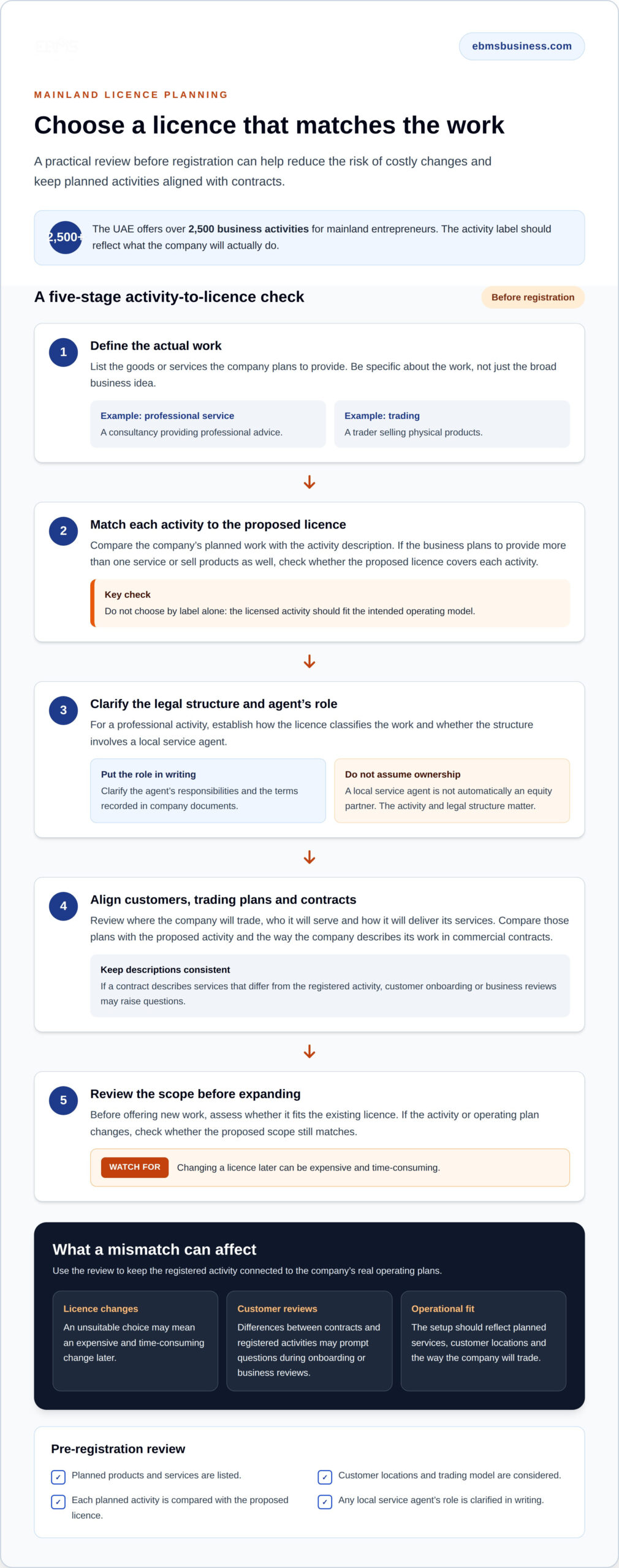
The licence and legal structure should reflect the company’s actual work, customers and contracts. The UAE offers over 2,500 business activities for mainland entrepreneurs, so selecting a label based only on a broad business idea can miss important distinctions. An activity that doesn’t match the planned trading model may require changes before the company can operate as intended.
Match the licence to the planned activity
Start by defining the goods or services the company will provide, then identify the activity that best describes them. A consultancy providing professional advice, for example, has a different operating model from a trader selling physical products. If the company plans to do both, consider whether the proposed licence covers each activity. Changing a licence later can be expensive and time-consuming, so the initial choice matters.
Professional licences and local service agents raise separate questions. For a professional activity, establish how the licence classifies the work and whether the structure involves a local service agent. Clarify the agent’s role and the terms recorded in the company documents, including whether the arrangement concerns ownership or another function. Don’t assume an agent is automatically an equity partner. The activity and legal structure matter.
Consider structure, trading and contracts
The right setup depends on where the company will trade and how it will deliver its services. A business selling directly to UAE customers may have different needs from one serving overseas clients. The structure also affects how shareholders document responsibilities and how the company describes its licensed activities in commercial contracts. Before registration, compare the intended work, customer locations and key deliverables with the proposed activity.
A mismatch can create practical problems even before a licence amendment is needed. For example, a contract may describe services that differ from the company’s registered activity, prompting questions during customer onboarding or business reviews. Keep the activity description, proposals and contracts aligned. If the business expands, assess whether the new work fits the existing licence before offering it.
- List the company’s planned products or services.
- Identify its customer locations and trading model.
- Compare each planned activity with the proposed licence.
- Clarify any local service agent’s role in writing.
This review helps founders focus on a structure that supports their intended operations, rather than choosing by label alone. For Dubai-specific formation considerations, explore Dubai mainland company formation. If you’d like help assessing the activity and structure, discuss your setup requirements.
What are the hidden or additional costs of mainland formation?
Regulated activities can require approvals beyond the main licence. The relevant authorities, documents and operating conditions depend on the activity and company structure.
Activity-Specific Approvals
Activity-specific approvals are permissions required from government bodies in addition to the trade licence. Preparing and submitting the required documents can add work to a formation plan. The activity determines which authority is involved and what supporting material it needs. Allow for approval steps when planning professional support, document preparation and launch timing.
Which UAE business activities require a local service agent, Emirati partner or government approval? It depends on the licensed activity and its rules. Some activities may require a local partner, while regulated work can require separate government approvals. These are distinct requirements: a partner arrangement concerns participation, while an approval grants permission to conduct an activity. Start by identifying the activity.
Approval costs can depend on the complexity of the activity, the number of authorities involved and the documents they require. A business with several regulated services may need more coordination than one conducting a single, straightforward activity. Include document preparation and required external approvals in the setup budget, rather than treating the trade licence as the only formation expense.
A mainland company may be able to trade across the 7 Emirates, but the permitted scope and conditions can depend on its licensed activities and applicable requirements. Activity-specific approvals or other conditions may affect where and how the company operates. For example, a company adding a regulated service to its existing commercial work should consider whether the new activity requires further permission before offering it.
Legal structure affects formation documents and how activities are recorded. Keep the proposed work, company documents and applications aligned. If the business changes its services, review whether its permissions and records still reflect its operations. This helps prevent rework, such as revising submissions after an authority identifies missing information or an activity mismatch.
Tax Obligations and Penalties
Corporate tax and VAT create compliance costs separate from licensing and activity approvals. Their application, registration deadlines and penalty exposure depend on the company’s circumstances and applicable rules. Treat tax administration as an ongoing budget item, not a one-time setup charge. The registration thresholds and rules discussed earlier determine when obligations apply.
What penalties apply? Missing tax registration or filing deadlines can result in penalties under the applicable rules. Track compliance dates and keep supporting records organised. The specific amounts and requirements are covered earlier in this guide. Businesses planning VAT administration can also use VAT registration support as part of their compliance planning.
Emirate- and sector-specific regulations
UAE mainland compliance can vary by emirate, licensed activity and company operations. A business operating across emirates should consider sector requirements alongside its core commercial licence.
What ongoing renewal, bookkeeping, audit and compliance obligations apply to UAE mainland companies? Companies need to renew their licences and applicable permits, maintain financial records, meet tax obligations and follow rules relevant to their activities. Under Federal Decree-Law No. 32 of 2021, mainland LLCs and other company forms must prepare annual financial statements audited by a UAE Ministry of Economy-approved auditor.
Local requirements and regulatory changes
Emirate-specific requirements can affect where a company operates and which approvals its activity needs. A company licensed in Dubai, for example, should plan for the rules tied to its activity there rather than assume registration alone covers every operating requirement across the UAE. Sector rules also matter: regulated commercial services may involve conditions beyond general company records.
Regulations evolve, so compliance planning should include a process for tracking changes affecting the company’s licensed activities. Assign responsibility for reviewing notices, recording decisions and updating internal procedures. If a shareholder changes the company’s activities, consider whether the licence and regulatory obligations need corresponding updates. This makes compliance part of routine corporate governance, not just an annual filing task.
Economic Substance Regulations
Economic Substance Regulations apply to UAE companies undertaking certain activities that must demonstrate actual economic presence in the country. The issue matters because non-compliance can lead to penalties and licence suspension. Some businesses subject to Economic Substance Rules must file a report by June 30 each year. Companies should identify whether their activities fall within the relevant scope and maintain records that support their operations.
For an international group, this may involve documenting how the relevant UAE entity conducts its business and where its operations take place. Company records should support the activity it declares, rather than relying only on incorporation documents. Applicability depends on the activity, so start the compliance review with actual operations.
E-commerce and data obligations
A mainland e-commerce business must account for rules covering consumer rights, data security, electronic contracts and digital signatures. These areas affect everyday operations, from presenting terms to customers to handling personal information. For example, a company selling online should align its customer-facing terms with its electronic contracting process.
UAE businesses must maintain financial records for at least five years. Keep transaction records, contracts and supporting financial documents organised for reporting and audit work. Where the business handles personal data, clear consent, appropriate security and prompt breach reporting are also relevant compliance considerations.
Mainland market access and government tender eligibility
A mainland licence can suit entrepreneurs planning to do business directly with customers across the UAE. Its value depends on the company’s target market, contracts and tender plans, not simply where it is registered.
A Dubai mainland company may be able to trade with consumers and businesses across the 7 Emirates, subject to its licensed activities and any applicable rules or approvals. That access can support a commercial model involving customers in several emirates, such as a Dubai-based supplier serving buyers in Abu Dhabi and Sharjah. The licence must still cover the company’s actual activities, and any sector-specific approvals remain relevant.
A free zone company’s access to mainland customers depends on the applicable rules and arrangements for its activities. It may be able to enter the mainland market through a local distributor, but this changes how it reaches customers and manages commercial relationships. Before choosing a jurisdiction, weigh the distributor model against your planned sales, service delivery and contract arrangements.
This distinction matters when a business expects to contract directly with UAE mainland customers. A company relying on a distributor needs to account for that intermediary in its market-entry plan, including who manages customer relationships and how responsibilities are documented. A mainland structure may fit better when direct trading across the UAE is central to the operating model, subject to the relevant requirements.
Government tender eligibility
Mainland-licensed companies may be eligible to bid on UAE federal and local government tenders and contracts, subject to each tender’s requirements. Free zone companies may also be eligible in some cases, while restrictions may apply in others. Check the requirements for each tender. Tender access is not automatic: each opportunity has its own qualification requirements, which the company must meet to submit a bid.
For a government contract, align the company’s licensed activities with the work described in the tender. For example, a company bidding to provide a service needs a licence that reflects that service, alongside the documents required by the tendering authority. A suitable mainland licence may provide a route to eligibility, but it does not guarantee selection or award.
Compare the market route with the company’s full operating plan. Consider where customers are based, whether the business will trade directly or through a distributor, and whether government contracts are part of its commercial goals. Include ongoing obligations, such as corporate tax compliance, in the financial plan rather than focusing on market access alone.
For a practical assessment, map planned customers and contracts to the intended jurisdiction, licence and operating model. This helps reveal whether a mainland structure supports direct UAE trading or whether a free zone route with a distributor better fits the business. Discuss your mainland market access plans before settling on a setup route.
EBMS Business Services: Mainland Company Setup
EBMS Business Services LLC supports Mainland Company Setup, helping you turn your UAE activity, ownership structure and market plans into a formation application. Its business setup support can help align the proposed licence with your intended operations and explain the requirements involved.
If direct mainland trading doesn’t suit your plans, Free Zone Company Setup or Offshore Company Setup may better match your activities and intended market access. EBMS Business Services LLC also offers UAE Golden Visa Processing for entrepreneurs and investors considering that route. The right option depends on your business objectives, activity and preferred operating structure, not ownership alone.
For guidance on mainland formation or another suitable setup route, contact EBMS Business Services LLC to discuss your plans.
Make Your UAE Setup Decision With Confidence
Before committing, put your commercial plan into one working document: describe what the company will do, whom it will serve, how it will operate and what it needs to launch. This helps you assess the risks of mainland business setup for foreigners against your own priorities, rather than relying on assumptions or a generic checklist.
Use the plan to identify decisions that need to align, including shareholder responsibilities, operational needs and compliance tasks. Recording these choices can keep formation discussions focused and make it easier to spot unanswered questions before they lead to changes in the company’s arrangements.
If you’d like to discuss your plans and the setup considerations that apply, contact EBMS Business Services. A considered next step can help you move forward with a clearer understanding of the decisions ahead.
Frequently Asked Questions
What is the difference between a free zone and a mainland business setup in the UAE?
The two routes differ in where and how a company conducts business, as well as in their licensing arrangements. Beyond market access, free zones may offer packages combining a licence, visa issuance and workspace. These packages can shape plans for premises and staffing. Compare the package with the company’s actual needs, including where it will work, how it will serve customers and whether it needs a dedicated business address.
What are the main risks of setting up a mainland business in the UAE as a foreigner?
One practical risk is assuming a trade licence automatically leads to a corporate bank account. It doesn’t. Banks may request the trade licence, shareholder information, company registration certificate and evidence of business activities. Prepare a clear, consistent description of the company’s operations and supporting documents. Banking decisions are separate from licensing, so include account opening in operational planning rather than treating it as an automatic result of incorporation.
Can foreigners own 100% of a UAE mainland company, and what activities have ownership restrictions?
Foreign investors can own 100% of mainland companies for most commercial, industrial and professional activities, while some sectors may require a local partner. For a company with multiple investors, also consider how its formation documents record shareholdings, decision-making and the authority to act for the business. Clear documentation helps shareholders understand their roles and supports consistent records when ownership or control details change.
What are the visa, labor, Emiratisation, and employee sponsorship requirements for UAE mainland companies?
Employee planning should account for work permits, visa processing and the office space available to the company. Visa allocation is also linked to office space, so consider hiring plans and premises together. Emiratisation obligations depend on the requirements applicable to the business and should be included in workforce planning.
What are the risks of choosing a UAE mainland company structure, legal form, or business activity incorrectly?
A legal form can affect how many people may participate as partners and how the company is governed. A Dubai mainland LLC can have 2 to 50 partners, while a UAE Private Joint Stock Company can have up to 200 shareholders. These structures serve different ownership and governance needs. Consider the intended investor group and decision-making arrangements alongside the company’s commercial plans before settling on its legal form.
How do UAE mainland and free zone company rules, costs, and risks compare for foreign owners?
Compare the full operating arrangement, not just the licence. A free zone package may combine licensing, visa issuance and workspace, while other setups may involve separate premises and administrative arrangements. Neither route guarantees a corporate bank account: an application may require evidence of business activity and shareholder details. A useful comparison accounts for premises, staffing, documentation and banking preparation.
Do UAE mainland business setup rules and costs differ between Dubai, Abu Dhabi, and other emirates?
Yes. Licensing authorities, activity approvals and premises arrangements can differ by emirate, affecting the formation process and budget. The same business concept may involve different administrative steps depending on its location and sector. Before setting a launch budget, compare requirements for the specific emirate and activity, including external approvals and address arrangements. Don’t assume a process used in one emirate applies unchanged elsewhere.