

UAE E-commerce License: Choosing the Right Route in 2026 What if the licence route that looks simplest doesn’t fit the way you plan to sell? Searching for an online trade permit can make it sound as though every digital business needs the exact same approval. It doesn’t. Your products or services, sales channels, customers, ownership, and plans for staff or premises can all affect which business activity and setup route to consider.
It’s reasonable to want clarity before starting an application with EBMS Business Services LLC. An e-commerce activity describes what your business does, while the licence must reflect the activities and structure approved for your company. Choosing between a Free Zone, Mainland, or Offshore setup isn’t simply a matter of selecting the same package in different forms. Each route needs to be assessed against your business model and intended operations.
This guide explains how online selling can shape licensing choices, compares the practical questions to resolve before choosing a jurisdiction or structure, and outlines what to verify with the relevant authority. Preparing those details first can help you make a more informed decision and avoid submitting information that doesn’t match your plans. Requirements can change, so confirm current activity wording and application details before applying.
Key Takeaways
- An e-commerce activity describes what your business does. Confirm the current licence terminology and permitted activity wording with the relevant authority.
- Map your products or services, sales channels, customer markets, ownership, and operating plans before comparing setup routes.
- When assessing an e-commerce license dubai, compare Free Zone, Mainland, and Offshore options against your intended operations rather than assuming one route fits every business.
- Before applying, verify the required documents, any applicable approvals, and the correct application channel with the relevant authority.
- EBMS can help assess business activities and jurisdictions, and support licensing, documentation, and PRO services as part of company formation.
What does an e-commerce licence cover in the UAE?
An online shop is a way to reach customers, not a complete description of the business activity behind it. In the UAE, the appropriate licence and setup route depend on what the business does, how it is structured, and the relevant authority’s requirements. There isn’t one universal licence that automatically fits every business operating online.
In plain English, an e-commerce licence is an authorisation for specified business activities; e-commerce is the online channel through which a business offers goods or services. The licence records the activities the company is permitted to carry out. Activity names and licensing terminology can vary, so confirm the current wording and scope with the authority responsible for your chosen setup route.
The distinction matters when comparing an e-commerce license dubai with other setup options. A website or social media page describes where customers interact with you. It doesn’t establish whether you sell your own products, provide a service, or operate another type of business. For a broader overview of the sector, see E-commerce in the United Arab Emirates.
Does selling online automatically mean you need a specific licence?
Don’t choose a licence based only on a general label such as “online seller” or “digital business.” First describe the work you intend to do, then ask the relevant authority which activity wording and permissions apply. A social media storefront and a full online retail operation may use similar sales channels while having different business activities or operating needs.
For example, a business selling its own products online has a different core offer from a consultant delivering services remotely. The platform is only one part of the picture. Before applying, confirm that the proposed activity wording accurately covers your offer and planned operations.
Which online business activities should you identify first?
Write down the practical details of your model before comparing jurisdictions or structures. Clarify whether you sell goods, provide services, or use another model, such as facilitating transactions between other parties. Then note your sales channels, intended customer types, and planned operating scope.
Consider whether you’ll sell through your own website, social media, an online marketplace, or a combination of channels. Identify where your customers are based and whether you expect to expand your offer or operations. These details help frame the right questions, but they don’t replace confirmation from the relevant authority.
Once you have a clear activity description, you can compare setup routes more effectively. EBMS can help assess activity and jurisdiction options, including IFZA company setup options. Confirm current activity wording and requirements with the relevant authority.
How to assess your e-commerce business before choosing a licence
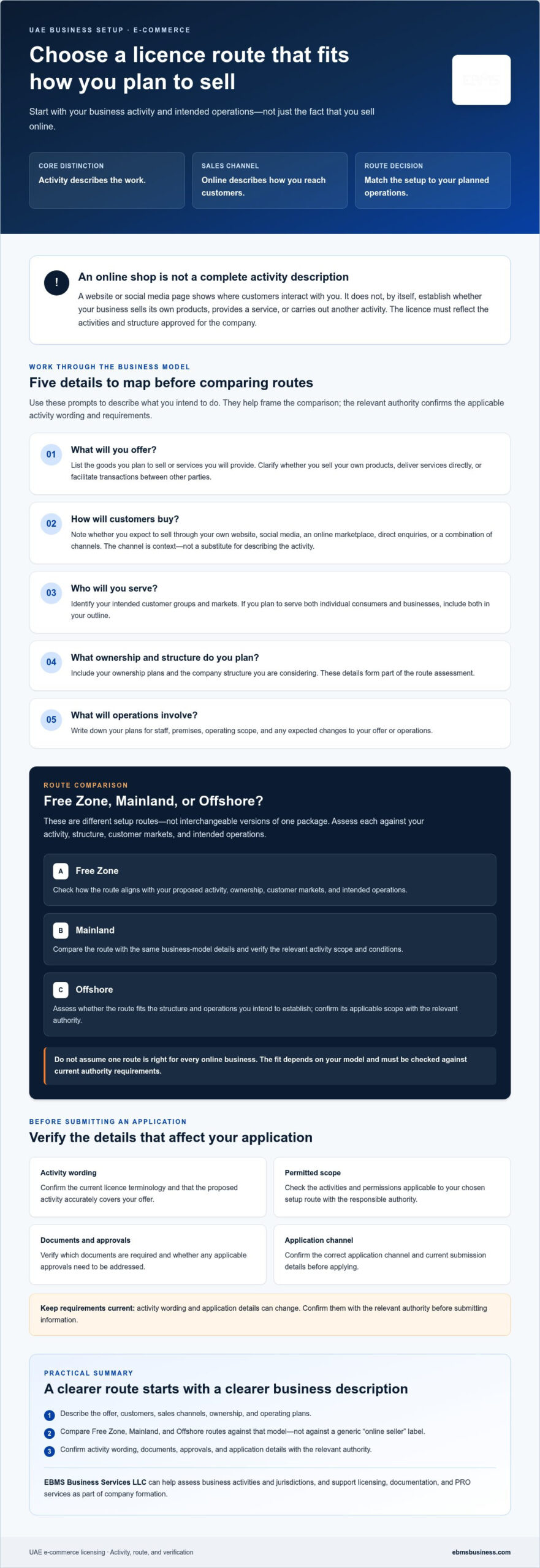
Start with how the business will operate, not with a licence package. Route selection starts with the intended activity and operating model. A clear description helps you compare your proposed activity with the scope and conditions of different setup routes, then verify the details with the relevant authority.
Work through these questions before requesting a route comparison:
- What will you offer? List the goods you plan to sell or services you’ll provide. Clarify whether your company sells its own products, delivers services directly, or acts as an intermediary connecting customers with other sellers or providers.
- How will customers buy? Note whether transactions will take place through your website, social media, a marketplace, direct enquiries, or several channels. The channel is useful context, but it doesn’t replace a description of the underlying activity.
- Who will you serve? Identify your intended customer groups and markets. If you expect to serve both individual consumers and other businesses, include both in your planning.
- Who will own and operate the company? Prepare the proposed ownership details and consider the operating structure you have in mind. Don’t assume that ownership plans or a preferred setup route automatically determine activity eligibility.
- What will the business actually do? Describe the expected scope, including any additional services or roles alongside selling. Activities that differ from the core offer may need separate review rather than being assumed to fit under one description.
What should you clarify about your online business model?
Turn your answers into a short, factual activity description. For example: “The company will sell its own homeware products through an online store to individual customers.” If you’ll also provide installation, subscriptions, or a marketplace for other sellers, state that separately. This is a discussion draft, not an approved activity description.
Market research can help you assess customer and channel assumptions. The International Trade Administration’s UAE eCommerce market overview offers market context, but it can’t confirm which licence activity or jurisdiction applies to your case.
Which application details should you prepare to verify?
Gather your proposed activity wording, ownership information, business contact details, sales channels, customer profile, and operating scope in one working document. Then ask the relevant authority which documents, approvals, and application channel apply to your case. Requirements may vary and change, so treat third-party checklists as preparation aids, not confirmation.
Assess activity and jurisdiction together. A route that appears suitable at first glance may not align with your planned operations or the authority’s current activity scope. EBMS can help compare Free Zone, Mainland, and Offshore company setup options against your plans. To discuss your circumstances, contact EBMS about your setup options.
Free Zone, Mainland, or Offshore: how to compare e-commerce setup routes
To compare setup routes for an online business, start with the company’s intended activity and day-to-day operations rather than assuming one route is automatically more suitable. Consider where the business expects to operate, how it will interact with customers, and what the relevant authority currently permits under the proposed activity.
Use this comparison to prepare questions, not to treat a route as pre-approved. Requirements and activity scope can vary, so confirm the details with the authority responsible for the setup you are considering.
| Route | Questions to ask | Authority to confirm | Possible operational considerations |
|---|---|---|---|
| Free Zone | Does the proposed activity match the authority’s current options? How will the company conduct its planned transactions? | The relevant Free Zone authority | Check whether the permitted activity and setup arrangements fit your intended sales channels, customers, and operating scope. |
| Mainland | Which activity wording applies, and does it cover the business’s planned customer interactions? | The relevant mainland licensing authority | Clarify how the company will operate, serve customers, and carry out each part of its business under the proposed licence. |
| Offshore | Does the structure provide the permissions needed for the actual business activity? | The relevant offshore registration authority | Distinguish company formation from authorisation to run an operating online shop. Confirm whether the planned operations are within scope. |
When should you compare Free Zone and Mainland formation?
Compare these routes once you can explain where and how the company intends to do business. Outline whether customers will order through a website, contact the company directly, or use another sales channel. Then check how the proposed activity and customer interactions fit the authority’s current guidance. EBMS’s Free Zone company formation information and Mainland company formation information can help you explore each route. Neither replaces confirmation from the relevant authority.
Is an Offshore setup suitable for an operating online shop?
Don’t assume that registering an Offshore company automatically authorises every activity involved in selling online. A company structure and permission to conduct specific business activities are separate questions to verify. Ask what operations the business needs, who its customers will be, and which licensing permissions apply. Confirm suitability directly with the relevant authority before treating Offshore formation as an e-commerce operating licence.
For an e-commerce license dubai, compare each route against the same activity description and operating plan. This gives you a clearer basis for checking suitability without relying on general claims about access, eligibility, costs, or outcomes.
What should you verify before applying for an e-commerce licence?
Before submitting an application or committing to a setup route, check that the proposed activity, operating plan, and application details match the relevant authority’s current guidance. A preparation checklist can help you spot unanswered questions, but it isn’t a definitive list of legal requirements.
Requirements can vary by activity and route, so recheck them with the relevant authority before applying. Activity descriptions, supporting documents, approvals, licence conditions, and application procedures may differ depending on your business model and chosen setup.
Which details can change and need current confirmation?
Ask the relevant authority to confirm the activity wording that best describes your business and the scope it permits. Check which documents and approvals apply to your application, along with any licence conditions. Don’t assume that a checklist written for another activity or route will fit your circumstances.
Request current written information on the following before making a commitment:
- Activity and scope: Does the proposed activity description reflect what the company plans to sell or provide?
- Documents and approvals: Which items apply to this activity and setup route?
- Application channel: Where should the application be submitted, and how will updates be communicated?
- Costs and timing: What charges apply to the specific setup, and what processing expectations should you plan around?
- Renewal: What renewal obligations, dates, or documents should the company track?
Confirm cost details in writing and ask which items are included or may be charged separately. Fees, processing expectations, and renewal details can change. Treat dated third-party eligibility or fee claims as unverified unless the responsible authority confirms them.
How can you reduce avoidable application uncertainty?
Keep the business activity description consistent across the application and supporting information. If one document describes online retail while another refers to services or intermediary work, clarify the difference before submission. Consistency makes it easier to explain the company’s intended activities without assuming that one broad label covers everything.
Record unresolved points and ask the authority who will review the application and where official requests or updates will appear. Get clarification before submitting or paying if the activity scope, documents, approvals, or charges remain unclear. EBMS can help review activity and jurisdiction options and support licensing documentation as part of company formation. The relevant authority remains the source for current application requirements.
How EBMS can help you plan your UAE e-commerce company setup
Once you’ve outlined what the business will do, test that plan against available company formation and licensing routes. EBMS Business Services LLC supports company setup across Free Zone, Mainland, and Offshore options, with activity and jurisdiction guidance to help compare them against your intended operations. No single route suits every online business, and current activity requirements should be confirmed with the relevant authority.
EBMS can also assist with licensing, government documentation, and PRO services as part of the formation process. Its support covers initial consultation, incorporation, and post-setup requirements. The aim is to help you understand the decisions and information involved, not to suggest that an application guarantees approval. Clear details about your business model make a setup discussion more useful.
What information should you bring to an initial setup discussion?
Prepare a short description of the products or services you plan to offer, how customers will buy, who will own the company, and which customer markets you intend to serve. Note any activities beyond the main offer. Bring questions about activity wording, jurisdiction, documents, and ongoing compliance, and ask which points need direct confirmation from the relevant authority.
What support can EBMS provide beyond initial licensing?
Company formation involves more than selecting a licence label. EBMS supports formation across Free Zone, Mainland, and Offshore routes, along with licensing, government documentation, and PRO services. The company also provides ongoing compliance assistance as part of its support from initial consultation through incorporation and post-setup requirements. The relevant authority remains the source for current activity conditions and application decisions.
To make the discussion practical, explain what you plan to do and where you need clarity. For example, say whether you’ll sell your own goods or provide services, which channels you expect to use, and the scope of your planned operations. EBMS can help you consider setup routes in light of those details and identify questions that still require authority confirmation.
EBMS Business Services LLC has supported UAE company formation and licensing since 2015. If you’re ready to discuss your plans, contact EBMS to discuss your business setup requirements. Bring your activity outline and questions so you can review the options and information to verify.
Take the next step with a clear setup plan
The right e-commerce setup begins with your business model, not a generic licence label. Define what you’ll sell or provide, how customers will transact, and the activities your company intends to carry out. Then compare Free Zone, Mainland, and Offshore routes against those plans, and confirm current activity wording, documents, approvals, and costs with the relevant authority before applying.
That preparation can help you discuss an e-commerce license dubai with greater clarity. EBMS Business Services LLC supports company formation and related licensing across Free Zone, Mainland, and Offshore routes. Its approach emphasizes transparent communication and multilingual assistance, with guidance tailored to your proposed activities and setup questions.
To compare routes and prepare for the next steps, contact EBMS for business setup guidance. Share your plans and questions to discuss the available options and what to verify.
Frequently Asked Questions
What is an e-commerce licence in the UAE?
An e-commerce licence is an authorisation associated with specified business activities, not a universal permit covering every kind of online selling. The activity describes what the company does, while a website, social media page, or marketplace is simply a sales channel. The applicable activity wording and setup route depend on the proposed business and the relevant authority’s current requirements. Confirm both before choosing a licence or making operating plans.
Do I need a licence to sell products online in the UAE?
The answer depends on what you sell, how you sell it, how the business will operate, and the relevant authority’s requirements. Identify whether you’ll sell your own goods, provide services, or use another business model, then note your sales channels and intended customer markets. Don’t rely on a general online-seller label to determine your position. Confirm current conditions with the relevant authority before accepting orders or making setup decisions.
Which licence is best for an online business in the UAE?
No route is automatically best for every online business. Compare your proposed activity, ownership, intended operations, and customer reach with the relevant authority’s current guidance. Free Zone, Mainland, and Offshore formation involve different setup considerations; none should be treated as interchangeable or as a guarantee of a particular business outcome. Prepare a clear description of your business and seek activity-specific guidance before selecting a route.
Can a foreign entrepreneur set up an e-commerce company in the UAE?
Eligibility depends on the proposed activity, chosen setup route, and the relevant authority’s current rules, so a general answer won’t confirm every entrepreneur’s circumstances. Ask the authority to verify the eligibility conditions and documentation for your case before proceeding. Be cautious about broad third-party claims regarding nationality, residency, or ownership. Confirm your own situation directly rather than assuming information about another route applies to you.
What documents are required for an e-commerce licence?
There isn’t a single document list that applies to every application. The relevant authority may specify documents based on the proposed activity, ownership, and setup route. Request its current checklist before applying, then check that names, activity descriptions, and supporting information are consistent throughout your materials. Treat examples from third-party guides as prompts for questions, not confirmation of the documents required for your application.
How long does it take to obtain an e-commerce licence?
There’s no processing time that can be promised for every application. Timing may depend on the selected route, whether the application is complete, any applicable approvals, and the authority’s procedures. Ask the relevant authority or a setup adviser for a current estimate based on your activity and circumstances. Treat that figure as an estimate, not a guaranteed completion date, and confirm whether outstanding information could affect the expected timing.
Can EBMS help me choose an e-commerce business setup route?
Yes. EBMS Business Services LLC provides business activity and jurisdiction guidance, company formation, licensing, government documentation, and PRO services across Free Zone, Mainland, and Offshore routes. Be ready to explain your activity, ownership, and intended operations when discussing your options. EBMS can help assess the setup choices, while the relevant authority confirms current requirements and makes licensing decisions. Contact EBMS to discuss your setup options.