

A trade licence is the official document that permits a business to operate in the UAE and sets out its approved activities. The trade license requirements for a new UAE company depend on the planned activities and whether you register on the mainland or in a free zone. Your chosen jurisdiction and licence type determine the application route.
The licence must match the work your business plans to do, since this affects the approvals and documents required. This guide explains the purpose of a UAE trade licence, the differences between commercial, professional and industrial activities, and what to consider when choosing a mainland or free zone setup. It also covers the application steps and documents that may be needed, including owners’ passport copies, visa and Emirates ID details where available, a Memorandum of Association for companies with multiple partners, and premises documents where applicable. Requirements vary by jurisdiction, so understanding these choices helps you prepare before applying.
Key Takeaways
- Match the licence type to the business activity, then confirm the activity fits the permitted scope.
- Choose mainland or free zone based on where and how the company intends to operate.
- Prepare owner and company documents relevant to the chosen jurisdiction and business structure.
- Follow the application sequence for the relevant licensing authority, from selecting activities and reserving a trade name to completing approvals.
- Understand what the Dubai trade licence authorises so the company’s planned operations align with its approved activities.
What is a Trade License in UAE?
A UAE trade licence permits a business to operate and identifies its approved activities. Choose your activities and jurisdiction carefully: both determine the licence type and application route.
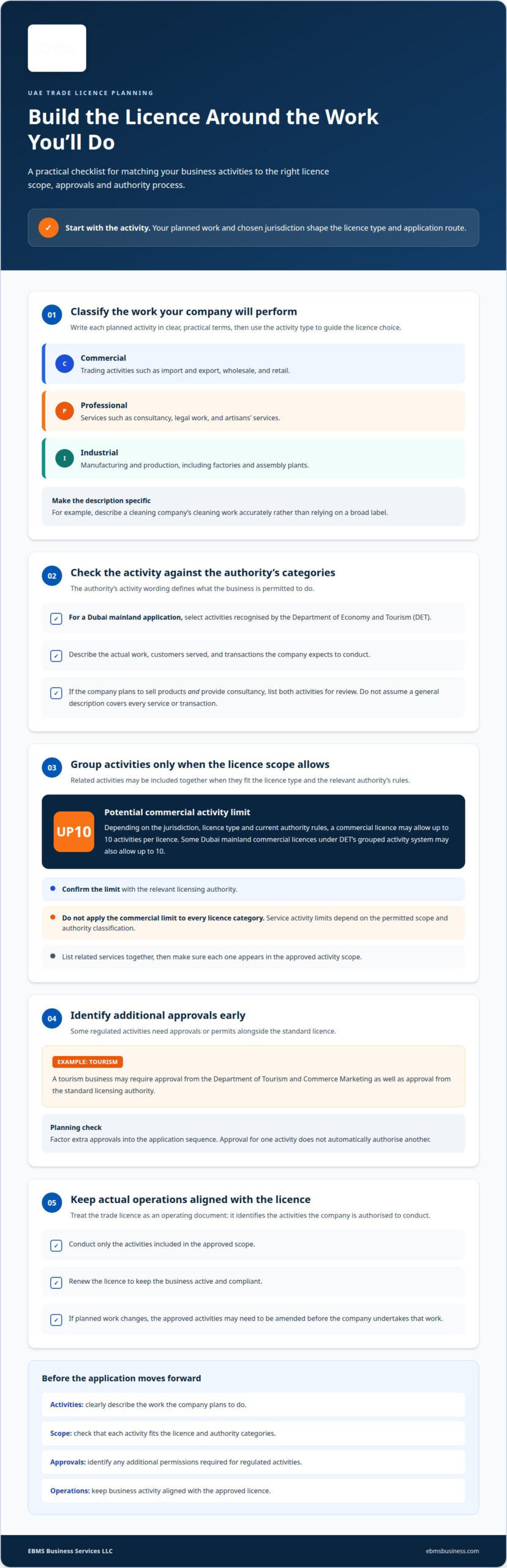
- Define what the company will do. Write each planned business activity in clear, practical terms before choosing a licence. In Dubai, commercial licences cover trading, such as import and export, wholesale, and retail. Professional licences cover services, including consultancy, legal work, and artisans’ services. Industrial licences apply to manufacturing and production, such as factories and assembly plants. A cleaning company, for example, should select an activity that accurately describes its cleaning work, rather than relying on a broad label. The cleaning business licence page illustrates how a specific activity can guide the licence choice.
- Match the activity to the licensing authority’s categories. For a Dubai mainland application, select activities recognised by the Department of Economy and Tourism (DET). The activity description matters because it sets the permitted scope of the business license. A company planning to sell products and provide consultancy should list both activities for review. Do not assume a general description automatically covers every service or transaction. The activity wording should reflect the actual work, the customers served, and the transactions the company expects to conduct.
- Group compatible activities under one licence. UAE businesses may include multiple approved activities when they fit the permitted scope of the licence type. Depending on the jurisdiction, licence type, and current authority rules, a commercial licence may allow up to 10 activities per licence. Under DET’s grouped activity system, some mainland commercial licences may also allow up to 10 activities. Confirm the applicable limit with the relevant licensing authority, as these limits apply to commercial activities, not every licence category. Service licence activity limits depend on the permitted scope and the licensing authority’s classification; the commercial limit should not be treated as a service licence allowance. List related services together, then ensure each appears in the approved activity scope.
- Identify extra approvals before completing the application. Regulated activities can require additional approvals or permits alongside the standard licence. Tourism businesses, for example, may require approval from the Department of Tourism and Commerce Marketing as well as the standard licensing authority. Factor this into your application planning, since an additional approval can affect the steps required before a licence is issued. Approval for one activity does not automatically authorise another.
- Keep the licence valid before operating. In Dubai, operating without a valid licence may result in penalties. The AED 40,000 repeat-offence fine may apply depending on the jurisdiction, circumstances, and current rules; confirm applicable penalties with the relevant authority. Treat the licence as an operating document, not merely a formation certificate: conduct only the activities it permits, and renew it to keep the business active and compliant. If the company’s planned work changes, the approved activities may need amendment before the business undertakes that work.
Application steps for a new UAE trade license
Follow the sequence set by your chosen jurisdiction: prepare the company details, apply, obtain approvals, receive the licence, then complete any post-licence actions. The trade license requirements for a new UAE company depend on its authority, activities and setup route.
Complete Company Formation Steps
Choose the jurisdiction and legal structure, then settle the company name and activities before filing. For a Dubai mainland setup, the Department of Economy and Tourism (DET) handles licensing applications and approvals. A trade name should be distinctive and consistent with the business activity. Avoid a name or activity description that conflicts with your planned work. These early decisions shape the documents and approvals needed later.
Submit the Application and Obtain Approvals
Submit your application to the authority responsible for the chosen jurisdiction. For Dubai mainland, this is DET; Abu Dhabi businesses can apply for licences and permits through ADDED’s eServices on TAMM. Initial approval may be required before the remaining steps. It allows the application to progress but does not replace any additional approval required for a regulated activity. Follow the authority’s instructions to identify what remains.
- Reserve a suitable trade name. Choose a distinctive name consistent with your activity description. Include your proposed activities so the authority can assess the intended scope. A company planning to manufacture, for example, should describe its production activity rather than use a broad trading label. Application routes vary across emirates and free zones, so follow the relevant authority’s process.
- Obtain initial approval and complete outstanding requirements. The UAE trade license initial approval process typically takes 10 minutes. In Dubai, initial approval is usually valid for six months while the applicant completes remaining steps. Use that period to address outstanding requirements and activity approvals. Initial approval is not the final trade licence.
- Complete the application and receive the licence. Submit company information and supporting documents, then complete applicable approvals and administrative steps. Most Dubai trade licences are issued within 3 to 5 working days once documents are submitted correctly and approvals are complete; some activities can take longer. This timeframe does not apply universally across jurisdictions.
- Handle post-licence administration. Renew the licence to keep it current, and apply for an amendment if details such as the business name or activities change. To cancel the licence, submit a request through the issuing authority and complete its closure steps. Track these ongoing obligations after the company begins operating.
How long does it take to get a UAE trade license? Most Dubai licences take 3 to 5 working days after correct documents and approvals, although some activities take longer. For help with the application sequence, discuss your UAE company setup.
Documents required for a trade license
Prepare your application file around the owners, company structure and premises. The issuing authority and jurisdiction determine which documents apply, so organise the core records before submission.
- Collect passport copies for every owner or partner. A trade licence application may require a passport copy for each person named as an owner or partner. Ensure names and identifying details match across the application and supporting records. For a company with several shareholders, prepare a separate copy for everyone listed in the proposed structure. This keeps ownership information consistent throughout the file.
- Add UAE residence and identity records where available. An application may require a UAE residence visa and Emirates ID if an owner or partner has them. Include the relevant records alongside that person’s passport copy. For applications with several partners, group each person’s documents together so the authority can review ownership details without mixing up applicants’ records.
- Prepare the Memorandum of Association for a multi-partner company. A Memorandum of Association (MOA) may be required for a company with multiple partners. It records the agreed company structure and links the proposed ownership to the licence application. Keep the MOA consistent with the partners named in the application. A single-owner application may have different document requirements.
- Gather premises documents when the application requires them. A tenancy contract and Ejari certificate may be required for an office or workspace, where applicable. Keep both records ready if your chosen setup requires premises documentation. Requirements depend on the jurisdiction and application. For renewal, some authorities may require at least one month to remain on the tenancy contract; confirm the current rule with the issuing authority and check the expiry date as you prepare.
- Arrange application and licensing payments through the relevant authority. Pay the application and licence charges shown by the issuing government authority. Charges and requirements vary between mainland authorities and free zones, so follow the payment instructions for your chosen route rather than relying on a generic amount. Keep payment records with the company documents to maintain a clear administrative trail for the application and later compliance tasks.
Before submission, group documents by owner, company structure and premises. This makes missing records easier to spot, especially when several shareholders or a tenancy contract are involved. Keep the file organised for renewals or amendments, and follow the issuing authority’s requirements for each transaction.
Mainland and Free Zone jurisdiction choices
Choose a jurisdiction based on your planned operations, activities and market access. The issuing authority and applicable rules depend on whether you select a mainland jurisdiction or a particular free zone.
-
Choose Mainland or Free Zone
Map where your company will operate and whom it plans to serve before choosing a jurisdiction. A mainland licence is issued by the relevant emirate’s economic department, while a free zone licence comes from that zone’s governing authority. This distinction determines the application route, not simply the company’s address.
Consider activity permissions alongside market access. If your business needs to operate outside a free zone, check whether the proposed structure supports that plan. Abu Dhabi’s Dual Licence allows establishments registered in Abu Dhabi free zones to conduct their activities and manage their business outside the free-zone area. Its scope applies to the relevant Abu Dhabi arrangement, not automatically to every emirate or free zone.
Mainland sponsorship also depends on the company’s activity and legal structure. The UAE Commercial Companies Law was amended in 2021 to allow foreign ownership for most mainland activities. That change means a local sponsor is not a universal requirement for every mainland company. However, ownership arrangements and approvals can still depend on the specific activity and applicable regulations. Review the proposed ownership and memorandum of association against those requirements before committing to a structure.
-
Identify the Issuing Authority
Identify the licensing authority for your chosen emirate or free zone. Dubai mainland applications go through the Department of Economy and Tourism (DET); in Abu Dhabi, the Department of Economic Development (ADDED) handles economic licensing. In other emirates, the relevant economic department issues mainland licences. A free zone company applies to that zone’s governing authority.
For example, the Jebel Ali Free Zone Authority issues licences for companies established within Jebel Ali Free Zone. Don’t assume one free zone’s rules apply to another. Each authority assesses activities and applications within its own jurisdiction.
Use the issuing authority’s scope to guide your next steps. Confirm that the proposed activity, legal form, and intended operating area fit the selected route. For a Dubai mainland structure, the Dubai mainland company formation process follows DET’s licensing route. For an industrial company, also consider whether its production activity and premises suit the chosen jurisdiction. The authority you select determines where the application and licence decisions are handled.
Dubai trade licence purpose
- Use the licence to establish the company’s permitted operating scope. A Dubai trade licence is the official document that permits a business to operate legally in Dubai. It also identifies the business activities the company is authorised to conduct. Treat those listed activities as the boundary of the licence, not as a general description of the company. For example, a licence listing consultancy work does not automatically cover product trading. Before signing a customer contract, make sure the planned work fits the activities recorded on the licence.
- Use the activity list to guide operational decisions. The licence connects the company’s chosen activities with its approved operations. A commercial licence may cover wholesale or retail trading, a professional licence relates to services, and an industrial licence covers manufacturing or production. These categories help licensing authorities assess the proposed business. They also give founders a practical reference when deciding whether a new service, sales channel or manufacturing activity fits the company’s current authorisation.
- Keep company records aligned with the licence. The licence names the business and its permitted activities, so use consistent details in corporate documents and commercial dealings. If the company’s name or activities change, the licence can be amended to reflect them. Don’t rely on an outdated activity list when preparing a proposal or contract. A licence is typically valid for one year from issue, so include renewal in the company’s compliance calendar and keep the current document accessible.
- Use the licence as a point of reference, not as a substitute for every approval. The Dubai Department of Economy and Tourism handles mainland business licensing applications and approvals. Some activities also require approval from another authority. Tourism businesses, for example, require approval from the Department of Tourism and Commerce Marketing in addition to the standard licensing authority’s approval. Before the company begins a new line of work, compare it with the licensed activities and identify any separate approval relevant to that activity.
- Apply the licence purpose to everyday business decisions. Check the activity scope when preparing an offer, entering a customer contract, or planning a new service. If the planned work falls outside the listed activities, arrange the appropriate licence amendment before proceeding. This helps keep the company’s actual operations aligned with the document issued by Dubai’s authorities. For guidance on establishing a Dubai company and selecting an appropriate setup route, discuss your business setup requirements.
EBMS Business Services: Freezone Business license
EBMS Business Services helps entrepreneurs choose a suitable UAE setup route and manage the related company formation. If your planned activities fit a free zone, EBMS provides Free Zone Company Setup and Freezone Business license services. If mainland operations better match your plans, Mainland Company Setup may be suitable; Offshore Company Setup is another option for a different company structure.
The right choice depends on your activities, intended operating area and the relevant authority’s requirements. Share your proposed activities and preferred jurisdiction with EBMS Business Services to discuss a suitable setup route and get help with your UAE company formation.
Move from planning to a suitable setup route
Your next decision is how the company will operate in practice: where it will serve customers, which activities it will carry out and what structure supports those plans. Treat the trade license requirements for a new UAE company as part of that wider decision, not as paperwork to handle after choosing a jurisdiction. A clear direction helps align your activities, company structure and application route from the outset.
EBMS Business Services offers Free Zone Company Setup, Mainland Company Setup, and Offshore Company Setup. The right option depends on your business plans and intended operations. If you want support weighing those routes and preparing for company formation, contact EBMS Business Services to discuss your requirements. A considered first step can give your UAE venture a stronger foundation.
Frequently Asked Questions
How does the choice of jurisdiction affect my business operations?
Your jurisdiction determines which authority issues the licence and the area in which the company is authorised to operate. A mainland company applies through the relevant emirate’s economic department; a free zone company follows its chosen zone’s authority and rules. For example, an Abu Dhabi free zone company seeking to operate outside its zone may consider the Abu Dhabi Dual Licence, which allows eligible establishments to conduct activities beyond the free-zone area.
What are the mandatory tax and compliance requirements for new businesses?
New businesses must consider VAT registration when their taxable turnover reaches the applicable threshold, and maintain records that support their tax filings and business activity. According to the Federal Tax Authority, registration is mandatory when taxable turnover exceeds AED 375,000, while voluntary registration is available from AED 187,500. UAE Corporate Tax has applied to most businesses since 2023. The company’s obligations depend on its circumstances and applicable rules.
What are the primary categories of business licenses available in Dubai?
Dubai’s primary licence categories are commercial, professional and industrial. Commercial licences cover trading, including wholesale and retail; professional licences cover service work, such as consultancy; industrial licences cover manufacturing or production. Choose the category that reflects your company’s core work. If you plan to sell goods and provide consultancy, have both activities assessed for inclusion rather than assuming one category automatically covers the other.
What types of UAE trade licenses are available, and which activities do they cover?
Common UAE licence types include commercial, professional and industrial, with permitted activities set by the licensing authority and jurisdiction. Commercial licences relate to trading, professional licences to services, and industrial licences to production. Some authorities also offer licences for specific activities or business models. For example, Abu Dhabi offers a Freelancer Licence for specified economic activities carried out remotely. The activity wording determines what work the licence authorises.
What documents are required to apply for a UAE trade license?
Applications commonly require passport copies for owners or partners and may require UAE residence visa and Emirates ID details where available. Companies with multiple partners may need a Memorandum of Association. Where premises documentation applies, prepare the tenancy contract and Ejari certificate. Group each owner’s records together and make sure company and ownership details match across the application and supporting documents.
What are the steps to obtain a trade license for a new UAE company?
First choose the jurisdiction, legal structure and activities, then reserve a suitable trade name and submit your application to the relevant authority. Obtain initial approval and complete any additional activity approvals or premises requirements. Submit the supporting documents and complete the authority’s remaining procedures before the licence is issued. Application routes vary between emirates and free zones, so follow the process for your chosen jurisdiction.
How much does a UAE trade license cost, including registration and renewal fees?
There is no single total that applies across UAE jurisdictions. The cost depends on the authority, selected activities, company structure, premises requirements, additional approvals, and any visa allocation. Renewal charges also vary by licence and jurisdiction. The price depends on the case and is provided after a quote request, with the relevant cost factors considered. Confirm the applicable charges for the chosen application route before proceeding.
What are the differences between mainland and free zone trade licenses in the UAE?
A mainland licence is issued by the relevant emirate’s economic department, while a free zone licence comes from that zone’s governing authority. The authorities set the application route and approved activity scope. Free zones may allow 100% foreign ownership in certain sectors. Mainland ownership rules have also changed: the UAE Commercial Companies Law was amended in 2021 to allow foreign ownership for most mainland activities. Check the specific activity and structure.