

The strategic advantages of a UAE holding company can include bringing shareholdings under one entity, creating a clearer framework for governance, and making future expansion easier to plan. Whether those benefits matter depends on what the company will own and how it fits your wider business. Start by identifying the ownership or planning issue you want to solve, rather than assuming that another company will automatically simplify your structure.
A holding company can also add administration. It doesn’t automatically deliver tax savings, legal protection, or simpler management. Its practical value depends on its role, the group’s activities, compliance responsibilities, and your objectives. Compare those factors before choosing a structure.
This guide explains what a holding company can own and how it differs from an operating business. It compares broad UAE mainland, free zone, and offshore formation pathways, and outlines the questions to resolve before planning a structure. Use it to assess whether a holding company supports your goals and what guidance you may need to move from an ownership plan to a formation pathway.
Key Takeaways
- A UAE holding company owns shares or assets, while subsidiaries can manage day-to-day business activities.
- The strategic advantages of a UAE holding company depend on your ownership, governance, and growth objectives, not on guaranteed outcomes.
- Mainland, free zone, and offshore pathways serve different purposes. Compare their operating scope and administrative implications against your plans.
- Map your assets, entities, and ongoing obligations before deciding whether a separate holding company adds practical value.
- Prepare a clear ownership plan to make discussions about jurisdiction, legal structure, and company formation more focused.
What Is a UAE Holding Company, and What Does It Actually Do?
A UAE holding company is an entity set up primarily to own shares in one or more other companies, known as subsidiaries. Rather than focusing on selling goods or services itself, it provides an ownership structure through which a person or business can hold interests in operating companies.
For example, a parent company might own shares in two subsidiaries: one runs a consultancy, while the other distributes products. The subsidiaries carry out their own business activities and handle their day-to-day responsibilities. The parent’s role centres on ownership and, depending on the structure and governing documents, oversight. This distinction helps explain the strategic advantages of a UAE holding company without suggesting that it suits every business.
“Holding company” describes an entity’s purpose, not a guaranteed tax or legal result. The label does not by itself create a separate tax category or determine how an arrangement will be treated in the UAE. The relevant facts, applicable rules, jurisdiction, and company documents matter. Plan the structure around its intended role, not assumptions about automatic tax savings, protection from liability, or reduced risk.
How does a holding company relate to its subsidiaries?
The holding entity may own shares in subsidiaries, while each subsidiary conducts its own activities and carries responsibilities connected to its business. Subsidiary management may handle operations, contracts, staff, and customer relationships, while the parent focuses on its ownership interests. The exact division depends on the companies’ arrangements and applicable requirements. Common ownership does not automatically remove a subsidiary’s responsibilities or prevent operational risks.
Start with an ownership map: identify the parent, the companies it owns, and the activities carried out by each subsidiary. This makes the structure easier to understand, but does not, by itself, determine how decisions must be made or guarantee that responsibilities will remain separate in every circumstance. Those details depend on the legal structure and how the entities operate in practice.
What can a holding company be designed to hold?
Shares in subsidiaries are the clearest example. Depending on the legal form, jurisdiction, and applicable requirements, a holding entity may also be designed to own certain investments or other permitted assets. Property and intellectual property require particular consideration of ownership rules and any relevant licensing or regulatory conditions. Don’t assume that every asset can be placed under the same entity simply because it is intended to be a holding company.
Distinguish between owning an asset and directly conducting commercial operations. If the entity will trade, provide services, or carry out another operating activity, its permitted activities and setup need to reflect that role. For general context, the Holding companies of the United Arab Emirates category lists examples, but it isn’t a guide to requirements for a specific structure.
Which Strategic Advantages Can a UAE Holding Company Support?
Consider what you want a holding structure to make easier: overseeing several businesses, planning future investment, or organising ownership for a later transition. The strategic advantages of a UAE holding company depend on the objective and how the structure is designed. It may provide a clearer framework for managing ownership across entities, but it doesn’t automatically improve performance or produce a particular legal or tax result.
Test each potential benefit against a practical need. A business with separate operating companies might want a clearer view of group ownership and a way to set group-level priorities. An investor planning to add subsidiaries might want a structure that makes those interests easier to organise. In both cases, value comes from matching the ownership design to its intended use, not simply from forming another company.
Can centralised ownership make governance clearer?
A single ownership layer can make it easier to see which entity owns each subsidiary and where group-level decisions sit. To make that map useful, define decision rights and document arrangements: which matters belong at parent level, which remain with subsidiary management, and how important decisions are recorded. Centralising ownership doesn’t remove the need for each subsidiary to manage its own activities and responsibilities.
Can the structure help consider risk and tax?
Separate entities may help organise different activities or investments, giving a business a framework for considering where particular responsibilities sit. This is a structuring consideration, not a promise that liabilities will be isolated or that creditors, regulators, or other parties can’t pursue claims. Outcomes depend on the circumstances, applicable law, company arrangements, and how the entities operate.
Tax treatment also depends on current UAE rules and the specific facts, including the entities, income, activities, and transactions involved. A holding-company label alone doesn’t secure an exemption, a lower tax burden, or a particular treatment. Before relying on a tax outcome, assess the proposed structure with qualified tax and legal advisers and consider its ongoing reporting and compliance implications.
Can it support growth, investment, or succession planning?
For succession planning, a documented ownership arrangement can give advisers a clearer starting point for reviewing how interests may pass or change over time. The right approach depends on the owners, assets, family or business objectives, and applicable legal requirements. Tailored legal and professional review is essential. Don’t assume that a holding company automatically protects assets, reduces tax, or simplifies succession. EBMS can help translate ownership objectives into UAE jurisdiction and legal-structure discussions as part of company formation planning.
How Do UAE Holding Company Structure Options Compare?
To assess which UAE pathway may fit a holding company, start with its intended role, the assets or shares it will hold, and its expected business relationships. “Holding company” describes the entity’s purpose; mainland, free zone, and offshore describe different formation pathways. These are related but separate decisions. A suitable choice depends on the activities, ownership objectives, and applicable requirements for the specific structure.
Use this comparison as an initial planning guide, not as a statement of guaranteed access, tax treatment, or licensing outcomes. Permitted activities and requirements can differ, so assess the proposed setup against current rules for the relevant jurisdiction.
| Pathway | May suit objectives such as | Questions to assess |
|---|---|---|
| Mainland | Planning for UAE business relationships or an operating role that needs to align with mainland plans. | What activities and relationships will the entity have? What licensing and administrative requirements apply to that specific plan? |
| Free zone | Considering a defined formation environment for holding interests or related business plans. | Which jurisdiction and permitted activities fit the entity’s role? What ongoing records and compliance responsibilities will apply? |
| Offshore | Considering an ownership arrangement whose planned role and assets may differ from those of a locally operating business. | Is the proposed purpose appropriate for the chosen framework? What ownership, reporting, and administration requirements need review? |
When might a mainland structure fit the ownership plan?
A mainland pathway may warrant consideration if the group’s plans involve UAE business relationships or operational activities that need to align with a mainland setup. First define the entity’s role, including whether it will only hold interests or also carry out activities. Then assess the relevant activity, licensing, ownership, and administrative requirements for that plan. EBMS’s mainland company formation guidance provides more detail on formation considerations.
When might a free zone or offshore pathway merit consideration?
A free zone structure may be appropriate where the proposed entity and its activities fit the chosen jurisdiction’s framework. A free zone label alone doesn’t establish a tax result or determine permitted activities. Review the requirements for the specific jurisdiction and plan. EBMS’s free zone company formation guide covers formation considerations in more detail.
An offshore pathway may merit review where the entity’s intended role and assets align with that option. Don’t assume it suits every investment, enables local operations, or creates a particular legal or tax outcome. Assess its permitted purpose and ongoing obligations against your ownership plan before deciding.
For all three pathways, compare more than the formation process. Consider the company’s intended activities, ownership records, documentation, banking needs, and continuing compliance responsibilities. These practical factors shape the administration involved. Learn more about connecting ownership objectives with a suitable formation pathway through EBMS.
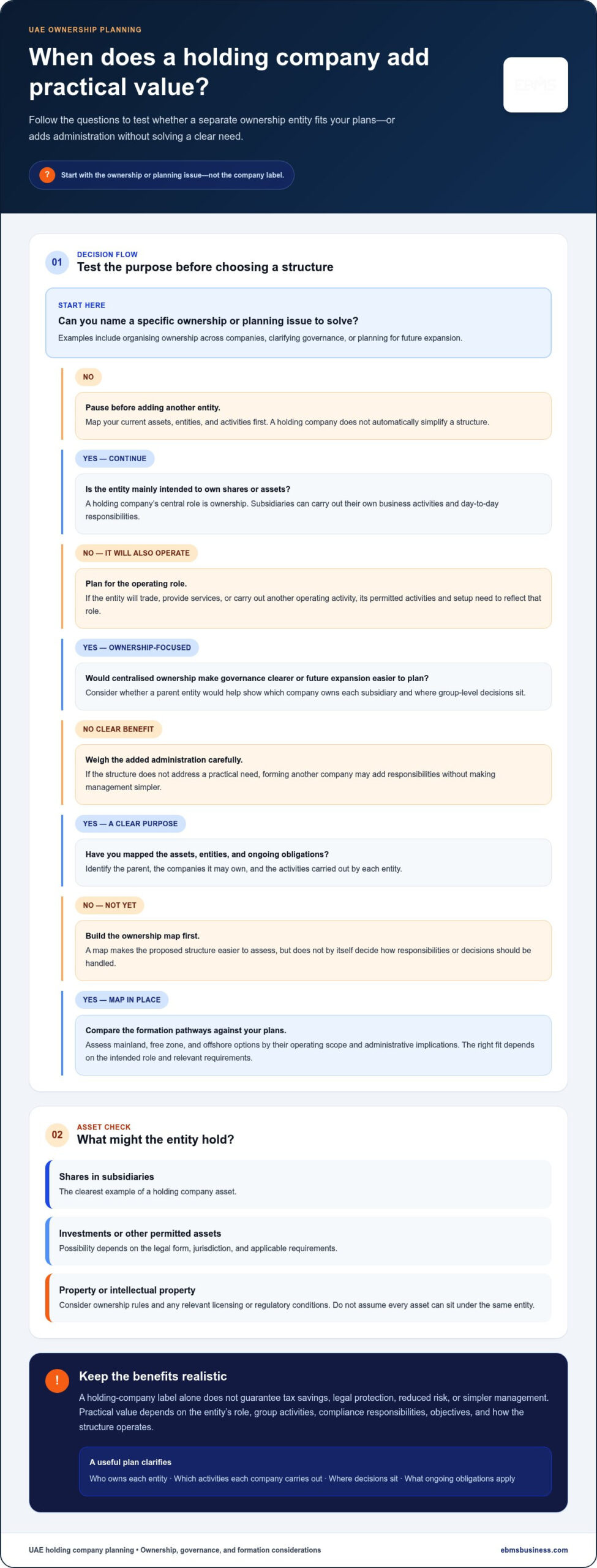
How Can You Decide Whether a UAE Holding Company Is Worth Considering?
Would a separate ownership entity make your business easier to govern or prepare for growth, or would it mainly add another layer to manage? Weigh the strategic advantages of a UAE holding company against its administrative demands. Use this decision sequence to check whether the structure serves a clear purpose.
- Define the objective. State what you want the structure to achieve, such as clearer group ownership, coordinated oversight, or a framework for planned expansion. Be specific enough to assess whether it delivers practical value.
- Map the assets. List the shares, investments, or other assets the entity may own. Note who owns them now and whether any transfer or change in ownership needs separate legal or professional review.
- Assess existing and planned entities. Identify current and proposed subsidiaries, their activities, their owners, and who makes key decisions. Consider how the group may develop, not just its current position.
- Review ongoing obligations. Consider the expected work for administration, accounting, banking, documentation, and compliance. Requirements depend on the structure and circumstances, so review current rules for the proposed arrangement.
- Compare alternatives. Weigh a holding company against simpler ownership arrangements. Decide whether greater clarity, group planning, or future expansion justifies the extra entity and its ongoing responsibilities.
What questions should you answer before choosing a structure?
Clarify what the proposed company will own, why those assets belong together, and how the group could change over time. Draw an ownership chart showing current and planned entities, their owners, and decision-making responsibilities. Separate business objectives from assumptions about tax, liability, or residency benefits. Those outcomes depend on current requirements and the specific facts, not just the company’s label.
What ongoing responsibilities should factor into the decision?
A new entity can mean additional records, accounts, banking arrangements, documents, and compliance work. Consider who will coordinate these tasks and how the parent’s records will relate to those of its subsidiaries. Compare the expected governance value with the effort and cost of maintaining the structure. If there’s no clear benefit beyond an assumed tax or legal outcome, pause and consider whether a simpler arrangement could meet the objective.
A holding company may be worth considering when it solves a defined ownership or planning need and the group can manage its obligations. EBMS can discuss your objectives and UAE formation considerations.
What Are the Practical Next Steps for Planning a UAE Holding Company?
Once you know what the structure should achieve, turn that objective into a clear formation brief. An ownership map and a realistic description of the entity’s role can help connect your plans with a suitable UAE jurisdiction and legal structure. They also help identify details that need further review before formation.
Prepare these items in sequence:
- Document your objectives. Write down why you are considering a holding company, what you want it to own, and what you want it to help organise. Separate practical aims, such as clearer ownership or planning for expansion, from assumptions about tax or legal outcomes.
- Map the ownership. Draw the current structure, including owners, existing entities, and the interests held by each. Note planned entities or assets separately so advisers can distinguish what exists from what you are considering.
- Describe planned activities. Explain whether the proposed company will only hold ownership interests or have another intended role. Include the activities of related entities and the business relationships the group expects to maintain.
- Compare formation pathways. Consider mainland, free zone, and offshore options against the intended role, ownership plan, and operating needs. Requirements vary, so assess current rules for each specific option rather than relying on general assumptions.
- Prepare questions for formation discussions. List what you need to understand about jurisdiction, legal structure, documentation, banking, and ongoing administration. This keeps the discussion focused on your ownership objectives and the responsibilities that follow.
What information helps clarify the formation pathway?
Prepare a short summary of the assets the proposed company may hold, why you want to group them, and any plans to add or change entities. Include an ownership chart and identify who will make decisions at parent and subsidiary level. List questions about government documentation, PRO requirements, corporate banking assistance, and ongoing compliance. These are planning topics, not assured approvals or outcomes.
How can formation and post-setup support fit into the plan?
Jurisdiction and legal-structure guidance can help translate an ownership plan into a formation pathway. EBMS supports UAE company formation across mainland, free zone, and offshore structures, with guidance on business activity, jurisdiction, and legal structure. Government documentation and PRO services, banking assistance, and compliance support can also form part of the plan, with requirements assessed for the specific circumstances.
Clear preparation helps you discuss the structure in practical terms: what it will own, how it fits the group, and what administration it may involve. EBMS can help you discuss your plans and formation considerations.
Turn Your Ownership Plan Into a Clear Next Step
Turn your preferred structure into a short, testable plan: what the entity will own, what decisions it should support, and how you’ll assess whether the added administration is worthwhile. Keep assumptions separate from points that need current legal or tax review. This gives you a stronger basis for deciding whether the strategic advantages of a UAE holding company align with your business objectives.
If your ownership map raises questions about jurisdiction, structure, or formation, a focused discussion can help clarify the issues to resolve before you proceed. EBMS supports company formation planning across UAE mainland, free zone, and offshore structures.
Contact EBMS to discuss your UAE holding company plans and business setup requirements. A considered structure starts with clear objectives and a practical view of the responsibilities that come with it.
Frequently Asked Questions
Is a UAE holding company automatically tax-free?
No. A holding-company purpose doesn’t automatically exempt an entity from UAE corporate tax. Tax treatment depends on the applicable rules and the company’s activities, income, ownership interests, and transactions. Exemptions may apply only when their conditions are met. Corporate tax registration and filing responsibilities may also apply, even where income is exempt. Review current requirements for the specific structure with a qualified tax adviser before relying on a tax outcome.
Can a UAE holding company own shares in other companies?
Yes. Owning shares in other companies is a common purpose of a holding company. Before arranging ownership, identify the intended shareholder and check that the proposed entity’s legal form and governing documents fit the arrangement. Consider how ownership records will be maintained and shareholder rights documented. If shares are being transferred from an existing owner, assess the transfer separately rather than assuming incorporation alone changes ownership.
What is the difference between a holding company and an operating company?
A holding company is primarily structured around owning interests, while an operating company carries out commercial activity. For example, an operating entity may contract with customers, invoice for services, and manage delivery, while the holding entity may hold its shares. A company’s permitted activities and formation pathway should reflect its intended role. If an entity will both hold interests and trade, assess how its activities and setup should be handled.
Can a foreign investor establish a holding company in the UAE?
Foreign investors can explore establishing a UAE company to hold business interests, but the appropriate route depends on the chosen jurisdiction, planned activities, and current ownership and formation requirements. The answer can differ across free zone, mainland, and offshore structures. Prepare details about the investor, intended assets, and related entities, then review the relevant requirements before selecting a pathway or arranging ownership.
Does a holding company protect its owner from subsidiary liabilities?
No. Setting up a holding company doesn’t guarantee protection from a subsidiary’s liabilities. The outcome can depend on applicable law, the facts of a claim, company arrangements, and how the entities are managed. An owner may also have separate obligations arising from its own actions or commitments. If risk separation is an objective, obtain legal advice on the proposed structure rather than treating entity separation as a complete shield.
When does a business need a holding company instead of one operating entity?
A business may consider a holding company when it has a clear reason to organise ownership across separate ventures, investments, or planned subsidiaries. It isn’t automatically needed just because a business wants to grow. If one operating entity can meet the business’s objectives, another company may add administration without useful value. Compare the intended governance or ownership benefit with the added formation and ongoing responsibilities before deciding.
What ongoing responsibilities can a UAE holding company involve?
Responsibilities can include maintaining company and ownership records, arranging accounting, managing banking documentation, and meeting applicable compliance and filing requirements. A UAE holding company must register for corporate tax and file an annual return, even if its income consists entirely of exempt dividends or capital gains. Confirm current registration, filing, and other compliance requirements for the specific entity and circumstances.