

A Free Zone licence alone does not guarantee a 0% corporate tax outcome. Tax treatment depends on more than a company’s location or licence. If you’re asking how to structure a business for zero tax in UAE, start by matching the legal structure to your actual activities and understanding which income may qualify.
It’s reasonable to want a clear, compliant way to manage tax obligations when setting up in the UAE. This guide explains when a 0% corporate tax outcome may apply, the conditions a Qualifying Free Zone Person must meet, and how Small Business Relief differs from the Free Zone regime. It also explains why 0% corporate tax treatment does not automatically remove VAT obligations. You’ll learn what to consider when choosing between Free Zone, Mainland and Offshore structures, and which records, registrations and filings to plan for. The aim is practical clarity, not a promise of a particular tax result.
Key Takeaways
- A Free Zone licence alone doesn’t guarantee 0% corporate tax. Treatment depends on the business’s tax status and the income it earns.
- When considering how to structure a business for zero tax in UAE, start with your actual activities, customers and operating model, then compare suitable jurisdictions and licences.
- Compare the standard corporate tax regime, potential Qualifying Free Zone Person treatment and Small Business Relief against your circumstances. Verify current conditions using official guidance.
- Plan for tax registration, accounting records, income classification and filing duties, even if you expect a 0% outcome.
- Consider corporate tax and VAT as separate obligations, and document why your chosen structure fits your operations.
What Does ‘Zero Tax’ Mean for a UAE Business?
Wanting to reduce your business’s tax exposure is understandable. But incorporating in the UAE, including in a Free Zone, doesn’t by itself guarantee a 0% corporate tax outcome. A company’s legal structure determines how it is formed and licensed. Its tax status determines which tax rules apply, while the treatment of particular income depends on the applicable rules, activities and transactions.
A Free Zone licence by itself does not establish 0% corporate tax eligibility. A licence identifies permitted business activities; it is not a tax ruling. For a Free Zone entity, the relevant question may be whether it qualifies as a Qualifying Free Zone Person and whether its income meets the requirements for qualifying income. These are separate assessments, and different revenue streams may receive different tax treatment.
This distinction is central to how to structure a business for zero tax in UAE. Start by identifying what the company will do, who it will transact with and how it will earn revenue. Then assess the appropriate legal structure and tax treatment. The UAE tax system covers distinct obligations, as outlined in Taxation in the United Arab Emirates. For current rules, refer to official UAE guidance and advice relevant to your circumstances.
Does a Free Zone company automatically pay zero corporate tax?
No. Free Zone incorporation alone doesn’t create an automatic 0% result. A Free Zone company may need to meet the conditions for Qualifying Free Zone Person status, and the 0% treatment applies only to qualifying income under the applicable rules. The activity, customer and transaction all matter, so don’t assume every sale or service receives the same treatment. A Free Zone company setup is a formation choice, not proof of tax eligibility.
Separate corporate tax, Small Business Relief, and VAT
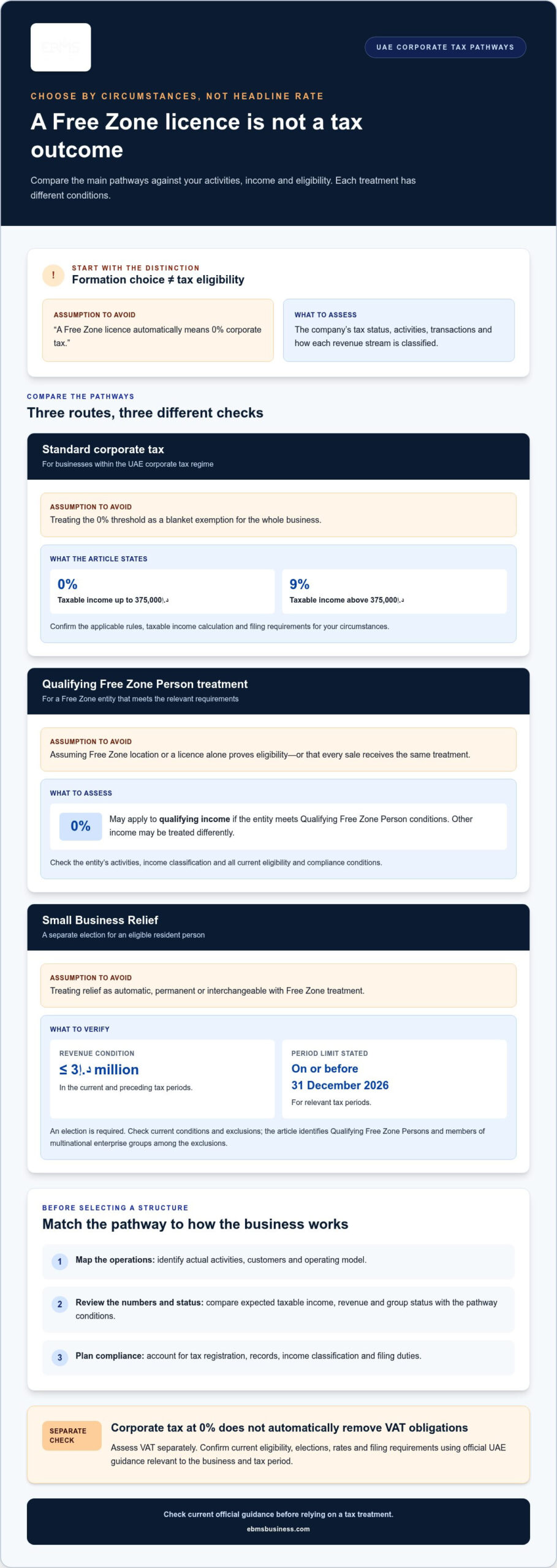
These are different tax questions, not interchangeable exemptions. Under the standard corporate tax framework, the 0% rate applies to taxable income up to د.إ375,000, with 9% applying to taxable income above that amount. A Qualifying Free Zone Person may access 0% treatment on qualifying income if it meets the relevant conditions. Non-qualifying income may be treated differently.
Small Business Relief is a separate election, potentially available to an eligible business with revenue of د.إ3 million or less, subject to current conditions and its period of validity. VAT also requires a separate assessment: a 0% corporate tax outcome does not automatically remove VAT obligations. Check current Federal Tax Authority guidance for eligibility, elections, rates and filing requirements before relying on any treatment.
Compare UAE Tax Pathways Before Choosing a Business Structure
The right tax pathway depends on more than a company’s licence. Before choosing a legal structure, compare the main options against your expected taxable income, revenue, activities and group status. The UAE Government’s corporate tax guidance is a useful starting point. Check the current rules for your tax period and circumstances.
| Pathway | Who it may suit | Key conditions and details to verify |
|---|---|---|
| Standard corporate tax | Businesses within the UAE corporate tax regime that don’t use another applicable treatment. | Taxable income up to د.إ375,000 is subject to 0%, and taxable income above that amount is subject to 9%. Confirm the applicable rules, taxable income calculation and filing requirements. |
| Qualifying Free Zone Person treatment | A Free Zone entity that meets the requirements for Qualifying Free Zone Person status. | 0% may apply to qualifying income, while other income may be taxed differently. Verify the entity’s activities, income classification and all current eligibility and compliance conditions. |
| Small Business Relief | An eligible resident person that makes the required election for a relevant tax period. | For periods ending on or before 31 December 2026, revenue must not exceed د.إ3 million in the current and preceding tax periods. Verify eligibility, exclusions and election requirements with current Federal Tax Authority guidance. |
When might a Free Zone tax pathway fit?
A Free Zone may suit a business’s operational and licensing needs, but its location doesn’t establish tax status. A company must meet the conditions for Qualifying Free Zone Person status, and the 0% treatment relates to qualifying income, not automatically to every activity or customer transaction. Review the activity and income rules before relying on this outcome. EBMS’s Free Zone setup services can help align formation and licensing choices with the proposed business activity.
When might Small Business Relief be relevant?
Small Business Relief is an election, not an automatic exemption. In general, the د.إ3 million revenue condition applies across the current and preceding tax periods, and the relief is limited to tax periods ending on or before 31 December 2026. Qualifying Free Zone Persons and members of multinational enterprise groups are among the exclusions identified in current guidance. Check the latest Federal Tax Authority wording, then compare eligibility with the business’s tax position before electing.
To assess how to structure a business for zero tax in UAE, compare the pathways with the company’s actual activities and projected income. Don’t select a jurisdiction based on a headline rate. Formation and tax treatment are connected, but they are not the same decision.
How to Structure a UAE Business Around Its Actual Activities
Build the company around the work it will genuinely perform, not around an assumed tax outcome. The activity, customer base, operating model and intended transactions help determine which jurisdiction and licence may fit. They also provide the facts needed to assess tax treatment. Sound tax planning follows the company’s actual activities and a documented operating model.
Use this sequence to make the decisions in order:
- Map activities, customers and transactions. List each revenue-generating service or product, the customer type, where counterparties are based and how each transaction will happen. Note whether the company will trade directly, serve customers through another business or conduct related-party transactions. Don’t assume a customer’s location or relationship automatically changes the tax treatment.
- Compare jurisdictions against the operating plan. Consider whether the business needs to operate in the UAE market, establish in a Free Zone or use an Offshore structure for its intended activities. Each route has a different formation and licensing context. Compare permitted activities and practical operating needs, then review the Mainland company formation overview as one reference when weighing jurisdiction options.
- Select a licence that reflects the work. Match the proposed activities to the relevant authority’s licensing options and the company’s planned revenue streams. If the business expects to add services or change its model, consider whether its activity list and licence will need to change. A licence should describe the intended business accurately, not substitute for tax analysis.
- Assess tax treatment for the proposed income. Review the company’s likely tax pathway against its status, activities and transactions. For a Free Zone structure, assess whether the conditions for Qualifying Free Zone Person treatment may apply and how specific income could be classified. For any route, verify current rules before relying on a particular rate or relief.
- Document the decision. Keep a concise record of why the jurisdiction and licence fit, what activities the company expects to perform, who its customers and counterparties are, and how it expects to earn income. This gives the business a clear basis for reviewing its position if its operations, customers or revenue streams change.
For example, a company planning to provide consulting to different customer types should map each service and transaction flow separately. That breakdown is more useful than relying on a broad label such as “consultancy” when comparing licences or assessing the tax treatment of income.
Mainland, Free Zone and Offshore formation are structural choices, not tax outcomes. A Mainland setup may be considered for planned UAE-market operations; a Free Zone route may fit activities and operating arrangements available through the relevant Free Zone; an Offshore structure may suit a different intended business model. The suitability of each depends on current requirements and actual operations. To understand how to structure a business for zero tax in UAE, treat jurisdiction choice and tax eligibility as connected but separate decisions. Revisit the analysis if the business model changes.
Plan Tax Compliance Before You Rely on a 0% Outcome
A tax position needs consistent records and timely administration to support it. Expecting a 0% result doesn’t automatically remove corporate tax registration, recordkeeping or filing duties. Businesses subject to UAE Corporate Tax must register with the Federal Tax Authority, even if they expect no tax to be payable. Return deadlines and other requirements depend on the applicable rules and tax period, so check current guidance rather than relying on an old summary.
Use this operating checklist to connect the company’s tax position with its day-to-day activity:
- Keep accounting records organized. Track revenue by activity and source, expenses, customer and supplier transactions, and related-party dealings where relevant. Records should show how reported figures reflect the business’s actual operations.
- Set and monitor the tax period. Identify the company’s applicable tax period and calendar the related registration, return and payment requirements. Corporate tax returns are generally due within nine months after the end of the relevant tax period. Verify the deadline that applies to your business.
- Review income classifications. For a Free Zone business relying on qualifying treatment, keep track of which income is treated as qualifying and which may not be. Reassess classifications when contracts, activities or counterparties change.
- Manage VAT separately. Corporate tax and VAT have distinct registration and filing considerations. Mandatory VAT registration generally applies when taxable supplies and imports exceed د.إ375,000 over the previous 12 months; voluntary registration may be available at د.إ187,500, subject to the applicable rules. Confirm current thresholds, exceptions and filing dates using official guidance. EBMS provides VAT registration and filing support as part of its corporate services.
Keep evidence that supports the chosen tax treatment
Good records tell a coherent story: what the company does, how it earns revenue and how transactions flow through the business. Keep accounting information organized so it supports eligibility assessments and reflects the company’s stated operating model. Recordkeeping and retention requirements can depend on the applicable rules, so verify the current requirements for your tax position rather than relying on a generic document checklist.
Review the structure when the business changes
A new service, customer group, revenue stream or operating arrangement can affect assumptions made at setup. Revisit the company’s activities, income classifications and eligibility when those facts change. A result from a previous period doesn’t necessarily establish the treatment for a later period, and relief or qualifying conditions may apply differently over time. Check official guidance for current deadlines and requirements before filing.
For a practical review of your formation and compliance planning, discuss your UAE business structure with EBMS.
Build a UAE Company Structure That Fits Your Business and Tax Position
A sound setup decision starts with the business, not a promised tax result. Map the activities and operating model, compare Mainland, Free Zone and Offshore options, then assess the relevant tax treatment and compliance requirements against current rules. The practical question is how to structure a business for zero tax in UAE while ensuring the chosen structure also supports the way the company intends to operate.
EBMS supports company formation across these jurisdictions, helping business owners consider their activities and licensing needs as part of the setup decision. Formation guidance can help you compare possible routes, but eligibility for a particular tax treatment depends on the rules and the company’s circumstances. No licence or jurisdiction guarantees a 0% outcome.
What to prepare for a structure discussion
A concise business outline makes it easier to compare setup options. Describe the proposed activities, customer types, expected revenue sources and how the company will deliver its products or services. Note whether you’re considering Mainland, Free Zone or Offshore formation, and explain the practical reasons for that preference, such as where you expect to operate or which activities the business plans to undertake.
Include any tax assumptions you’re relying on, such as expected Free Zone treatment or a possible relief election. These can then be considered against current rules rather than treated as settled facts. If the business already operates, prepare a clear summary of its activities and income streams so the discussion reflects its actual position.
How EBMS can support the setup process
EBMS can help you assess formation options, licensing and relevant PRO processes as you plan the company’s setup. The focus is on matching the proposed jurisdiction and licence to the intended business activity, while keeping formation decisions distinct from tax eligibility. This gives you a clearer basis for deciding which setup route to explore and what questions need further review.
Planning also extends beyond incorporation. Accounting and bookkeeping can help keep business records organized, while VAT and ongoing compliance support can contribute to a more structured approach to administration. These services support the company’s operating and compliance needs; they don’t determine or guarantee its tax treatment.
Before moving ahead, bring together your activity outline, customer and revenue details, preferred jurisdiction and any tax assumptions. EBMS can discuss your business model and formation requirements, helping you consider the available setup pathways and related corporate support. For a tailored conversation, contact EBMS for business setup guidance.
Make Your Next Setup Decision With Confidence
Your business structure should support the company you’re building, not just the activity you plan to start with. As your offer, customer base or operations develop, revisit whether the setup still fits and whether your tax assumptions remain aligned with current UAE requirements. A considered approach to how to structure a business for zero tax in UAE means treating the tax position as something to assess and maintain, not a benefit guaranteed by incorporation.
Before taking the next step, write down what the business will do, how it expects to earn revenue and which setup options you’re weighing. That gives you a practical starting point for discussing licensing, formation and related compliance needs. EBMS Business Services LLC, founded in 2015, supports UAE company formation across Free Zone, Mainland and Offshore jurisdictions, alongside licensing, accounting, VAT and ongoing compliance assistance.
For guidance tailored to your plans, contact EBMS to discuss a UAE business structure that fits your activities. With a clear view of your operations and the right questions in hand, you can move forward on a more informed foundation.
Frequently Asked Questions
Is a UAE Free Zone company automatically subject to 0% corporate tax?
No. Registering a company in a Free Zone doesn’t by itself establish eligibility for 0% corporate tax treatment. The company’s activities, income and compliance with the conditions for Qualifying Free Zone Person status all matter. For example, income from two different services may need separate assessment rather than being treated alike simply because both appear on one licence. Check current Federal Tax Authority guidance before using a 0% rate in financial forecasts.
Can a UAE company pay 0% corporate tax and still have filing obligations?
Yes. A company may have registration, return, recordkeeping or other compliance duties even if no corporate tax is payable for a period. An expected 0% result doesn’t by itself mean the company can skip a return. Keep the amount of tax due separate from the question of what the business must register for or file. Requirements can depend on the company’s status and tax period, so verify them using current official guidance.
What is the difference between Small Business Relief and Free Zone tax treatment?
They’re separate pathways, and eligibility for one doesn’t automatically establish eligibility for the other. Small Business Relief is an election subject to conditions, while Free Zone treatment depends on the company’s status and whether its income meets the relevant requirements. When comparing the two, consider the business’s legal form, revenue sources and activities rather than relying on its licence label. Check the current rules for the specific tax period before making a decision.
Does 0% corporate tax mean a UAE business does not need to consider VAT?
No. Corporate tax and VAT are separate obligations, so a 0% corporate tax position doesn’t determine whether VAT registration or filing applies. A business could have a particular corporate tax treatment while its taxable supplies still require a separate VAT assessment. Review the nature and value of supplies, relevant imports and the company’s circumstances against current rules. Confirm applicable thresholds, exceptions and filing requirements through Federal Tax Authority guidance.
How much revenue can a business have and still qualify for Small Business Relief?
The Federal Tax Authority guidance provided for this question states a revenue condition of no more than AED 3,000,000 across the relevant current and previous tax periods. That figure alone doesn’t confirm eligibility: other conditions, exclusions and dates may affect whether the business can elect for relief. Check the latest FTA guidance for the tax period in question, especially if revenue changed between periods or the business belongs to a wider group.
Can an Offshore company be used to guarantee zero tax in the UAE?
No. An Offshore structure doesn’t guarantee a particular tax result. Consider the structure against the company’s intended activities, operations and applicable tax rules. For example, a business planning to serve customers through active UAE operations should assess whether its proposed Offshore setup suits that model before proceeding. Compare formation requirements with the actual commercial plan, and assess the position against current rules rather than treating the jurisdiction as a tax exemption.
Do business owners in the UAE pay personal income tax if their company qualifies for 0% corporate tax?
A company’s corporate tax position doesn’t determine its owner’s personal tax position. The UAE does not impose personal income tax on salaries, but an owner’s wider circumstances may still matter, including residence, income type and tax rules in another relevant jurisdiction. For example, a shareholder living outside the UAE may have personal reporting or tax obligations there. Don’t infer an individual’s position from the company’s treatment; obtain advice that considers the person’s circumstances.